This guide is for anyone who must get a slab, column or foundation poured and has not yet worked out which machines are involved. It lists the main types of concrete equipment in the order a pour uses them. For each one you get what it does, who usually supplies it, the mistake to avoid and where to read more.
What machines does a concrete pour involve, from mixing to a finished surface?
A villa foundation and a warehouse floor pass through the same stages. The table maps each stage to the machine that does it and shows who usually brings it.
| Stage | Machine | Who usually supplies it | Read next |
|---|---|---|---|
| Make | Batching plant, or portable mixer | Ready-mix supplier, or the contractor for small jobs | Ordering ready-mix and pour-day checklist |
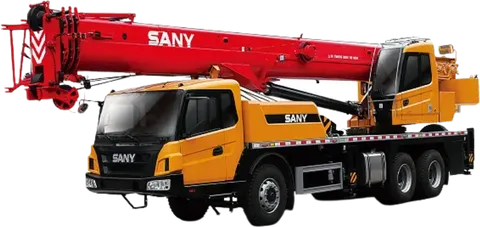
| Carry | Concrete mixer truck, dumper, crane bucket | Ready-mix supplier; crane and dumper hired separately | Equipment by construction phase |
| Place | Boom pump or line pump | Pump hire company, with operator | Boom pump vs line pump |
| Compact | Concrete vibrator | Contractor, or hired with the crew | Vibrator section below |
| Finish | Power trowel | Contractor or floor-finishing crew | Finishing section below |
| Cut | Floor saw | Contractor or a specialist crew | Finishing section below |
The formwork that holds the concrete is a separate hire; see formwork systems compared.
Where is concrete made: batching plant, ready-mix supplier or a portable mixer?
A batching plant measures cement, aggregates, water and admixtures by weight or volume into a set mix. The measuring is what makes one load match the next. In cities, ready-mix from a plant is the usual source.
A portable concrete mixer suits small volumes mixed on site, such as a small footing or a repair. Larger or continuous pours are normally ordered as ready-mix, because mix consistency and volume are harder to control by hand.
A big project may set up its own plant on site. Browse concrete batching plants if that is your case.
Note. The mix design, strength grade and testing are set by the project engineer and the specification. Order what the specification says. Do not choose a mix by machine or by habit.
How does concrete travel: mixer truck, dumper, bucket or pump?
A concrete mixer truck carries the mix in a rotating drum that keeps it agitated on the way. It is not unlimited: the specification and the ready-mix supplier set a time limit from batching to discharge, which is shorter in hot weather. The truck is the usual link between the plant and the pour. Before it is booked, check that it can reach the site, turn round and park where it can discharge.
From the truck, the concrete still has to reach the formwork. There are four common ways:
- Chute straight from the truck. Only for pours at ground level that the truck can reach.
- Dumper or power buggy. For slabs and footings where the truck cannot get close.
- Crane and bucket. For columns and walls at height where a pump is not used.
- Pump. For most slabs, decks, tall elements and anywhere with limited access.
The common mistake is booking the truck and forgetting how the load gets from the truck to the formwork. A truck waiting with no way to unload puts the whole load at risk. Decide that route, and where the trucks will wait and wash out, before you order.
Which pump moves it to the pour: boom pump or line pump?
A concrete pump moves the mix to where it is needed. A boom pump places concrete through an articulated boom on a truck. A line pump pushes it through steel pipes and flexible hoses that a crew lays out.
In short, a boom pump needs space to set up and reach, and a line pump needs a crew and pipe runs. Either way, the pump needs firm, level ground and clearance from overhead power lines, so follow the pump operator's instructions on set-up and keep people clear of the boom and the pipe end. The full comparison, with reach, access and set-up, is in the guide linked in the table. Browse concrete pumps to see what suppliers list.
Why does concrete need a vibrator, and what does the machine do inside the formwork?
Fresh concrete traps air as it is placed. A concrete vibrator consolidates the mix inside the formwork by releasing that trapped air. The concrete then fills around the reinforcement and into the corners, and the finished element is dense.
The usual type is a poker (internal) vibrator, pushed into the concrete in a pattern. Others work from outside, on the formwork or across the surface of a slab. Ask which type suits your element, and who holds it: the machine, a spare, and a trained person.
Two mistakes are common. Too little vibration leaves voids and honeycombing next to the formwork. Too much can make the mix separate, with the heavy stones settling out. The fix is a crew that knows the method and follows the engineer's instructions.
How are slabs finished and joints cut: power trowel and floor saw?
A power trowel is used on a slab once the surface has stiffened enough to carry the machine and operator. It levels and closes the surface. Starting too early damages the slab, and starting too late makes the surface hard to work.
The timing depends on the mix, the weather and the slab. In hot, dry conditions the surface can stiffen faster than the crew expects. Have the finishing crew and machines ready before the pour ends.
A floor saw later cuts control joints in the hardened slab. The joints give shrinkage cracks a planned line to follow. The engineer's drawings or specification give the pattern and the timing window. Book the saw and its operator against that window, not as an afterthought. Sawing concrete makes silica dust, so ask for wet cutting or other dust control and suitable respiratory protection.
Watch out. Curing keeps the concrete moist and protected after finishing, and poor curing weakens the surface and invites cracking. In hot, dry weather, plan curing before the pour starts, not after.
What should be on site and what can be supplied for the day?
Mixer trucks, a pump with its operator and often a crane are usually supplied for the day. Vibrators, hand tools, the power trowel and the crew often stay with the contractor. Roles differ by project, so ask each supplier what they bring.
Ask the supplier of each machine:
- Is an operator included, and for how many hours?
- What access, space and ground does the machine need?
- What do you need on site when it arrives, such as water, power or a washout area?
- What happens if the pour starts late or runs long, and what is the time limit from batching to discharge?
- Who is the contact on the day?
Because concrete stiffens from the time it is batched, the answers for the pour-day machines must fit into the same day. Write one timeline and share it with every supplier. For example, for a slab:
- Day before: walk the site and reconfirm every start time (the checklist in the first table has the full day-before list).
- Pour day: the pump arrives and is set up before the first truck. The vibrator crew and spare are ready.
- During the pour: trowel and finishing crew start when the surface allows, not when the last truck leaves.
- After finishing: curing starts, and the saw is booked for the window in the specification.
For ordering and the full pour-day list, use the ready-mix and pour-day checklist linked in the first table. For building a house, see the equipment list for a villa.
Access and working-hour limits differ by project, site owner and municipality. Confirm them before mobilising.
How to do this on Maedah
Post one request for the pour. Add each machine you need, such as the pump and the crane, with quantities. Set the city, the site on the map and the date. Note the driver or operator in the requirements.
Suppliers who offer those categories in your city answer with sealed quotes. Compare them side by side: what is included, operator hours, response time and rating. You can also browse concrete equipment as a guest. Agree the price and payment with the supplier you choose. Maedah does not process payments.