Your excavation has hit rock or cemented ground, and the bucket no longer digs it. This guide is for contractors and landowners who must now decide what to ask for. Breaker vs ripper vs rock drill is settled by the rock, the volume and what is close to the site, not by which machine is easiest to find.
What kind of hard ground is it? Ask before choosing a method
"Rock" can mean a weathered layer that a strong machine tears apart, or a massive, hard body that only impact or splitting will move. Cemented sand and caliche sit in between and often fool people on first sight.
A geotechnical investigation report shows the rock type, the depth at which it starts and its strength. If you have no report, a test pit dug where the rock showed gives a basic picture: how hard the top of the rock looks, whether it has cracks and how it is layered. A pit shows only that one spot and only as deep as it was dug, so it does not replace a report on a large site.
Do this before you ask for quotes. A quote built on a guess about the rock is a common cause of cost and schedule surprises: either the method fails, or the supplier prices the worst case.
Tip. Photograph the test pit with a tape measure in the frame, and keep the pictures to show suppliers. They can then judge the method instead of guessing.
Watch out. Locate underground services before digging a test pit. Nobody should enter a deep pit unless its sides are sloped or supported and the site has declared it safe. Take the photos from the edge.
Ripping: when a tooth is enough, and when it is not
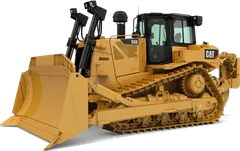
Ripping uses a ripper tooth mounted on the back of a bulldozer. The tooth is pulled through the ground and fractures it mechanically. The loosened material is then pushed or dug out in the normal way. New to the machine names? Read which machine does what.
Ripping is the simplest method when it works. It suits weak, weathered or well-fractured rock, where the tooth can follow existing cracks. On massive, hard rock the machine slips, wears out and moves very little. It also needs room: a bulldozer makes long passes, so it is a poor fit for a narrow trench or a steep-sided pit.
Watch out. The machine must be large enough for the method. A light dozer with a heavy ripper can be unsafe and will be ineffective. Ask the supplier to confirm that the ripper is approved for that dozer before you accept the offer.
Hydraulic breaking: precise, slower, and limited by volume
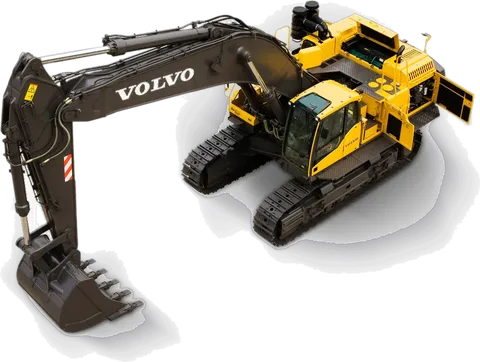
A hydraulic breaker is an attachment on an excavator. It breaks rock by repeated impact from a hard tool tip. (Making openings in concrete is a different job: see core drilling vs breaking concrete.) See the guide to excavator attachments for how it fits and what the hitch and hydraulics must supply.
Its strength is control. The operator breaks exactly where needed, so it works close to structures, in trenches and around services.
Its weaknesses are speed and side effects. Output is slow on large volumes because every piece is broken in turn. It also makes noise, dust and vibration, and the site owner or neighbours may limit working hours or methods. Rock dust can contain fine silica, so the site needs dust control and the right respiratory protection for people nearby. Dust also harms machines: see dust, sand and overheating.
Rock chips fly, so ask whether the cab protects the operator from flying fragments, and have the supplier confirm that the breaker suits the excavator.
Rock drilling: why holes are drilled, and why that is a specialist job
A rock drill makes holes in rock. By itself it removes nothing. The holes exist so the rock can be fragmented, either by blasting or by a non-explosive splitting method.
Blasting is tightly controlled and must be done only by authorised specialist contractors who hold the permissions that apply. Requirements differ by project, site owner and authority, so confirm them before mobilising any drill. This guide does not cover how blasting is done.
Where blasting is not allowed, for example close to buildings or services, non-explosive options exist, such as hydraulic splitting and chemical demolition agents. Each needs drilled holes first. Both are usually slower than blasting, and the chemical agents are sensitive to temperature, so follow the specialist's advice for hot weather. A specialist can say which option suits your rock.
Breaker vs ripper vs rock drill: how do they compare?
| Factor | Ripping | Hydraulic breaking | Drilling for splitting or blasting |
|---|---|---|---|
| Rock it suits | Weak, weathered, well-fractured | Most rock, in small amounts | Hard, massive rock |
| Not suited to | Massive, hard rock | Very large volumes | Small volumes, or any site where the owner allows neither blasting nor splitting |
| Volume | Large areas with room to work | Small to medium | Large, once the rock is fragmented |
| Near structures | Limited: needs room for long passes | Good: controllable | Depends on method; blasting may be prohibited |
| Noise and vibration | From the machine; can still be high in hard ground, so check site limits | High, plus dust | Drilling is noisy; blasting adds its own limits |
| Who does it | Equipment hire; check whether an operator is included | Equipment hire; check whether an operator is included | Authorised specialists |
Use the table as a first filter, then ask these four questions in order:
- Is anything close enough to be damaged by vibration or a long dozer pass (a wall, pipe, cable, neighbour)? If yes, rule out ripping and blasting, and ask about a breaker or non-explosive splitting.
- Is the rock weathered or cracked, with room to work? Ask for ripping.
- Is the rock hard and massive, in large volume? Ask a specialist about drilling for splitting or blasting.
- Is the volume small? Ask for a breaker.
Many jobs combine methods: a dozer rips the weathered top, a specialist splits the hard core, and a breaker trims near a wall.
What to settle with the site owner before any rock work starts
Settle these in writing before the machine arrives:
- Method allowed. Does the site owner, client or authority permit breaking, blasting or splitting here?
- Limits. Are there working-hour, noise, dust or vibration limits, and are neighbours or live services close enough to need monitoring?
- Underground services. Do you know where pipes, cables and foundations run?
- Specialists. Who holds the permissions for any blasting or splitting, and have you seen proof?
- Safety zones. Who sets and watches the exclusion area for flying rock? See banksman and exclusion zones.
- Where the rock goes. Is it crushed, stockpiled or hauled away, and who arranges that?
Requirements differ by project, site owner, municipality and insurer. Tell your supplier what was agreed.
What to ask the supplier
- What machine and attachment do you propose, and what are their size and weight?
- What rock did you assume, and from which report or test pit?
- Why is this machine suited to that rock? Ask for the reasoning, not just the name.
- Does the quote include an operator, breaker tools or ripper teeth, and wear parts?
- Can we try a small area first, before committing the full volume?
- What happens if the rock turns out harder than assumed?
How to do this on Maedah
Put what you know into one request. Name the machines, such as a hydraulic breaker, a bulldozer with a ripper or a rock drill, with quantities and dates. Pin the site on the map and add requirements such as a driver, insurance or Urgent. Tell each supplier what you know about the rock, and keep your test pit photos ready to share when you chat about a quote.
Suppliers who offer that category and serve your city send sealed quotes. Compare them side by side: machine size, what is included and how they handle harder rock. Agree payment directly with the supplier you choose.