This guide is for a contractor, homeowner or new site manager who must hire machines for groundwork and does not yet know the names. It sets out the main types of earthmoving equipment, matches each to a job, and decodes the Arabic and brand names, so suppliers send the right machine the first time.
What does earthmoving involve, from digging to hauling?
Almost every groundwork job is a chain of up to six actions:
- Dig the ground, for a trench, a foundation or a pond.
- Load the loose material onto a truck or into a hopper.
- Push it into a heap or across the site.
- Level or spread it to a rough shape.
- Haul it away or bring fill in.
- Break hard or rocky ground that a bucket cannot cut.
No single machine does all six well. That is why a site usually has two or three machines working together.
Which machine digs: excavator, mini excavator or backhoe loader?
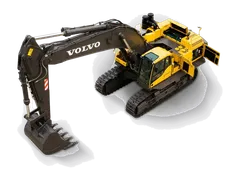
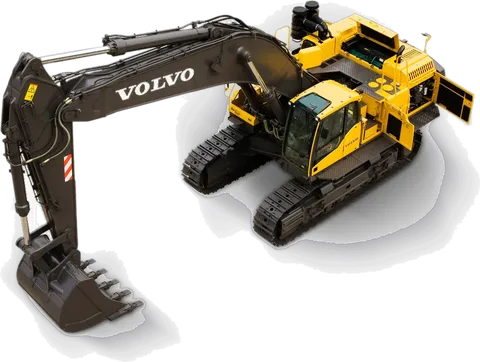
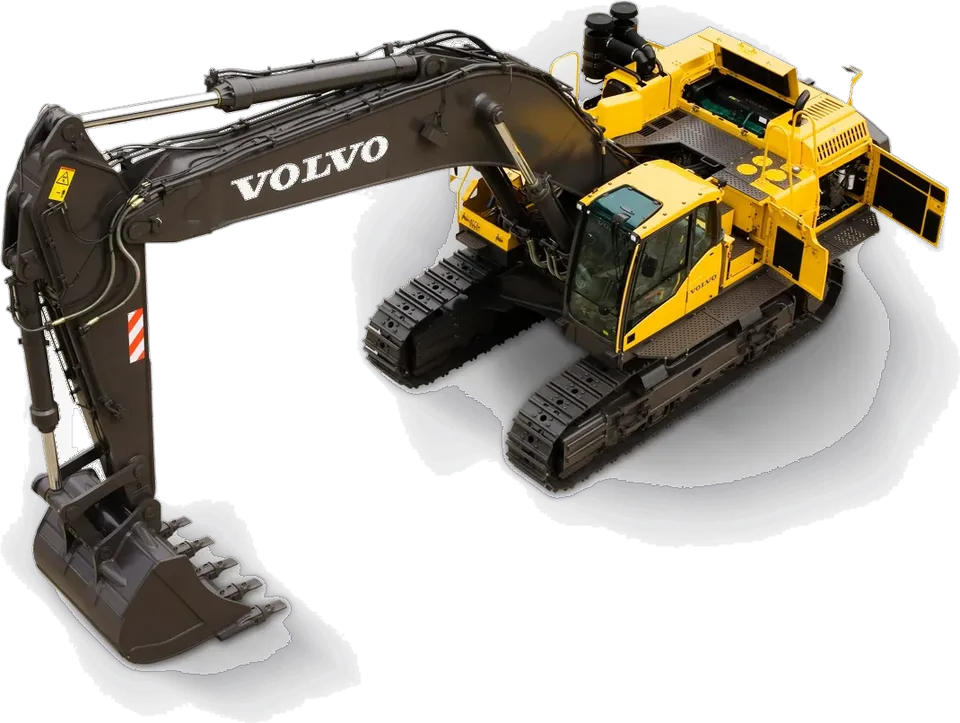
The excavator (in Arabic, حفار, also called بوكلين by many) digs with a bucket on a boom and a stick. On the usual design, the upper structure turns a full circle on the undercarriage. So it can dig, swing and dump without moving its tracks. A mini excavator is the same idea in a smaller size, for tight access and light work.
The backhoe loader is one wheeled machine with a loader bucket at the front and a digging arm at the back. Its stabilisers are lowered when it digs, so it must stop and set up each time. In Saudi Arabia, "JCB" is often used for any backhoe loader, so check the real make and model.
The excavator's limit: it is slow to travel and does not spread material well. The backhoe's limit: it is a compromise, so it digs and loads less well than a dedicated machine of each kind. For sizing, read what size excavator you need. To choose between the two small options, see mini excavator vs backhoe loader.
Which machine loads and carries: wheel loader or skid steer?
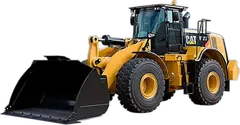
A wheel loader (لودر or شيول) lifts material with a front bucket and steers by an articulated frame, which bends in the middle. Its normal job is loading trucks from a stockpile and moving loose material over short distances. It is not a deep-digging machine.
A skid steer is a compact loader. It steers by driving the left and right sides at different speeds, so it can turn in very little space. It works with quick-change attachments such as buckets, pallet forks, brooms and augers. "Bobcat" (بوبكات) is often used for any skid steer, in the same way as JCB.
The wheel loader's limit: it is not made for trenches or deep digging below the level it stands on. The skid steer's limit: it is small, so it moves little material per trip and is best for tight sites and clean-up. More detail is in skid steer vs wheel loader.
Which machine pushes and spreads: the bulldozer?
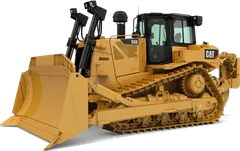
A bulldozer (بلدوزر) pushes and spreads material with a front blade. It runs on crawler tracks, which give traction and spread the weight over a large area. An optional rear ripper tooth can break up weak or weathered ground.
Use it to clear a plot, push material into heaps and spread fill in layers. Its limit: it does not lift or load a truck, and it is slow over distance. Browse bulldozers to see what is listed.
Note. A ripper loosens weak or weathered ground. Whether it works on rock depends on the rock, and a breaker may be needed. If the ground may be hard, ask the supplier to review the site or soil information first, and read breaker vs ripper vs rock drill.
Which machine hauls the material away: dump trucks?
Dump trucks (قلاب) carry the material off site or bring fill in. They do not dig and they do not load themselves. Rigid and articulated types suit different ground and distances, as set out in dump truck types.
On many jobs the trucks are the real constraint. A fast excavator waiting for trucks wastes hire time, and so does a line of trucks waiting for one slow loader.
Which machine for which job, and what is it called?
Start with the job.
| Job | Usual machine | What it cannot do |
|---|---|---|
| Dig trenches and foundations | Excavator | Travel far quickly; spread material |
| Light digging in tight access | Mini excavator | Dig deep or move large volumes |
| Dig and load on small mixed jobs | Backhoe loader | Match a dedicated excavator or loader |
| Load trucks from a stockpile | Wheel loader | Dig deep |
| Tight sites, clean-up, attachments | Skid steer | Move large volumes |
| Push and spread, clear a plot | Bulldozer | Lift or load trucks |
| Haul away or bring in fill | Dump truck | Dig or load itself |
| Break hard ground or rock | Excavator with breaker; bulldozer ripper for weak ground | Work fast in solid rock without the right attachment |
Fine grading and compaction use other machines, such as graders and rollers, which this guide does not cover.
Then check the name. A request with only a brand name can bring offers for the wrong machine. Write the plain type name.
| People say | Usually means | Write in your request |
|---|---|---|
| حفار, بوكلين | Excavator | Excavator (tracked or wheeled) |
| JCB | Backhoe loader | Backhoe loader |
| لودر, شيول | Wheel loader | Wheel loader |
| بوبكات | Skid steer | Skid steer loader |
| بلدوزر | Bulldozer | Bulldozer |
| قلاب | Dump truck | Dump truck (rigid or articulated) |
If a supplier answers with a different machine, ask what it is and why they chose it before you accept.
Tracks or wheels: how the ground and the distance decide
Choose by ground first, then by distance.
- Tracks (crawler) suit soft, uneven or sandy ground. They spread the weight and grip well.
- Wheels travel faster on hard surfaces and between sites, and they cause less wear on roads.
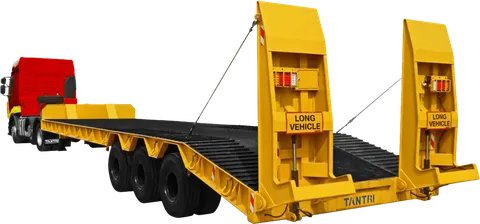
- Moving a tracked machine is usually done by lowbed trailer. Add that move to your plan (see the lowbed pre-trip checklist), and confirm with the supplier and transporter whether the load needs any route permit or escort.
If a machine will work in loose sand or on a soft, wet site, ask the supplier whether it suits that surface. If it moves between sites often, wheels may save more time than weaker grip costs.
Which machines usually work together on one job?
For example, take a pipe trench. An excavator digs. A wheel loader or the excavator itself loads dump trucks. Trucks haul the spoil away. A bulldozer, loader or skid steer later spreads the backfill.
Watch out. Deep trenches can collapse. Ask the site owner for the excavation and shoring plan, keep spoil and machines back from the edge, and never send anyone into an unsupported trench.
The slowest step sets the pace for the whole job. If loading is faster than hauling, the trucks are the constraint. A second excavator usually will not help; another truck usually will.
Before you hire, ask:
- How far is the dump point, and how long is a round trip?
- Can trucks reach the digging face without blocking the machines?
- Is there space for the loader to turn and stockpile?
- Will the ground carry tracked machines, or wheeled ones?
- Are there buried pipes, cables or other services at the site, and has the site owner confirmed where they run?
- Does the supplier provide the operator (wet hire or dry hire), and what qualifications, induction or permits does the site require?
How to do this on Maedah
Write your job in plain words in one request. Choose the machines from the list, add the quantities, and put the site on the map. Add the dates and any needs, such as a driver. A project with several machines can go in a single request.
Suppliers who offer those categories in your city send sealed quotes. They arrive side by side, so you can compare what is included. Check that each quote names the machine type, not just a brand. You can also look first at excavators and loaders. If you are new to hiring, how to rent heavy equipment in Saudi Arabia covers the full process.