Weighing a silent vs open generator for a site office, camp, event or facility, and the supplier offers both? Both make the same electricity. What differs is noise, protection and access. This guide gives you four site questions, a comparison table, and the noise and clearance checks to make before you accept a quote.
Silent vs open generator: what is the actual difference?
An open generator has the engine and alternator mounted on a frame. Nothing surrounds them. You can see and touch every part, and air moves around the engine without restriction.
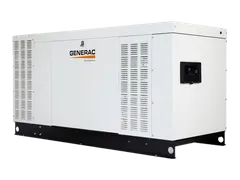
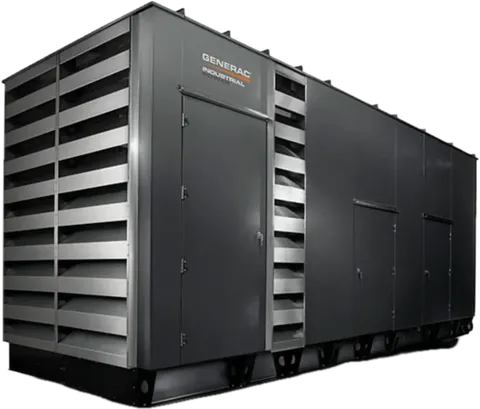
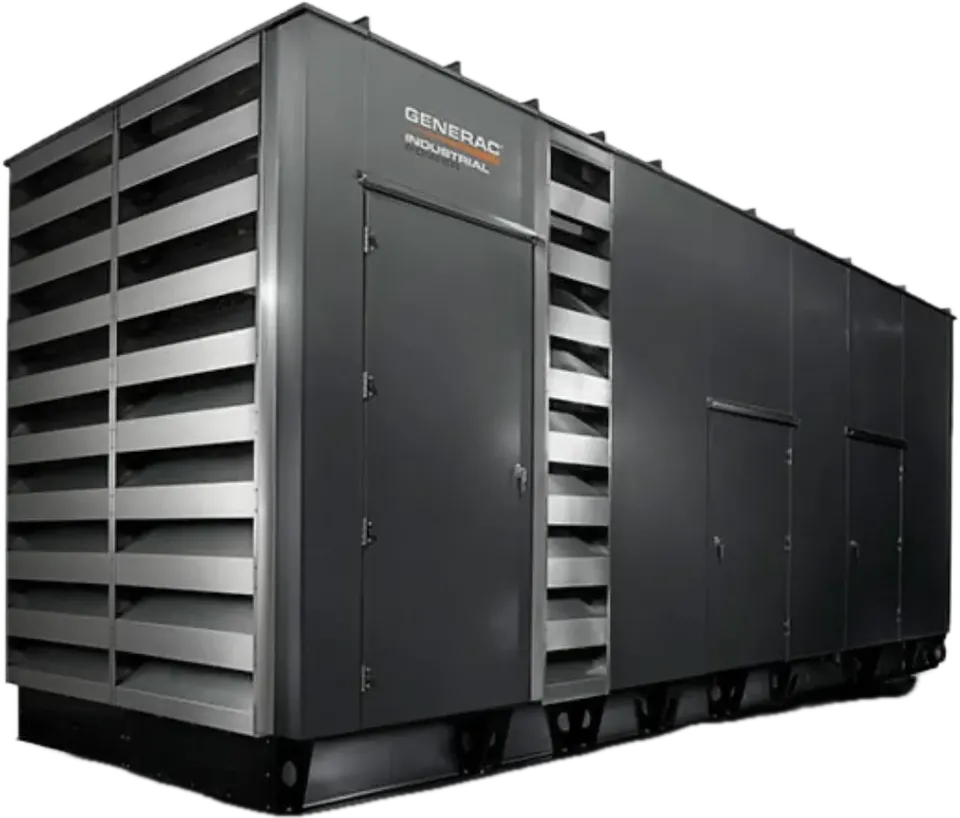
A silent generator is the same kind of set placed inside a canopy. The canopy has sound-absorbing lining and air inlets and outlets built to carry cooling air through while keeping noise down. Many canopy sets also carry the fuel tank in the base frame.
The engine and alternator do not change. The enclosure changes what you hear, what the set is protected from, and how easy it is to inspect.
| Silent (canopy) | Open | |
|---|---|---|
| Noise | Lower | Higher |
| Rain, dust, sand | Better protected by the canopy | Needs a shelter or careful siting |
| Casual contact | Moving parts are covered, but the exhaust and canopy can still be hot | Exposed, so people must be kept away |
| Cooling | Depends on canopy airflow | Direct, easier |
| Daily checks | Through doors and access points | Direct view and reach |
| Moving and placing | Usually larger and heavier | Usually more compact |
When is a silent (canopy) generator the better choice?
Lean towards a canopy set when any of these is true:
- People live, sleep or work within hearing distance: neighbours, a hospital, offices, a camp, an event audience.
- The set stands outdoors with no shelter, in rain, dust or sand.
- Workers, visitors or children can walk past it and touch it.
- The set runs for long hours every day, so noise adds up.
A canopy also covers the moving parts and reduces the dust and sand that reach the engine. That matters on open, dusty sites where an uncovered set collects grit in every opening. A canopy with doors that close also keeps casual hands off the controls and moving parts. Ask the supplier whether the doors can be locked.
Note. A canopy lowers noise. It does not remove it. Ask for the figure and the distance it was measured at, as described below.
When is an open generator enough?
An open set is enough when noise is not a problem and the set is looked after:
- The site is remote and nobody lives or works near the set.
- The set stands in a fenced yard or a purpose-built plant room, with engineered ventilation and the exhaust led outside. Only trained staff go near it, and the need is short or supervised.
Open sets also suit places where you want to see and reach everything quickly. The trade-off is that you must provide the shelter and the separation from people and weather yourself.
How do heat and ventilation change the choice in Saudi conditions?
Hot weather makes cooling the first concern. Whether the set is open or silent, the engine needs a steady flow of cooling air and a way for hot exhaust gas to leave. If airflow is blocked, a set can overheat and shut down, typically at the hottest hour when you need it most. A set can also deliver less output in high ambient temperature, so ask the supplier what temperature it is rated for.
For a canopy set, this means the air inlet and outlet must stay clear. Do not stack pallets, parked vehicles or fencing against them. For an open set, a shelter must not trap hot air around the engine.
Dust and sand add a second load. Fine dust clogs filters and radiators, in either type. A canopy reduces this but does not stop it, so ask the supplier how often filters are checked. For more on this, see dust, sand and overheating: protecting your machines.
Watch out. Exhaust contains carbon monoxide. A generator must never run inside a closed or unventilated room. Place it so exhaust cannot drift into cabins, tents or work areas.
Where should the generator stand, and what clearances does it need?
Pick the spot before the set arrives. Use these rules:
- Stand it on firm, level ground that will not soften or flood.
- Keep the exhaust pointing away from cabins, air intakes, doors and windows.
- Leave open space around the air inlets and outlets. Ask the supplier how much clearance that model needs.
- Leave room to open doors and panels, to reach the fuel filler and to refuel safely.
- Keep people, cables and stored materials out of a marked zone around the set.
- Never connect a generator to a building's wiring yourself. A qualified electrician makes the connection with the changeover the supplier and site owner require; see automatic transfer switch and paralleling.
For where power fits among water, cabins and access roads, see the site set-up checklist.
What should I ask the supplier about noise and access?
Noise is quoted in dB(A) at a stated distance, commonly 1 m or 7 m. A number without a distance means little. A figure at 1 m is higher than the same set measured at 7 m, so two quotes are comparable only if both use the same distance.
Ask the supplier:
- At what distance is the noise figure measured?
- Is it for this exact model with the canopy fitted and doors closed? Is it a sound pressure level at that distance, or a sound power level?
- Is the fuel tank in the base frame, and how do I reach the doors and filler point for daily oil, coolant and leak checks?
- Can the set be fitted with a shelter or fence if it is open?
Noise limits on and around a site differ by project, site owner and municipality. Confirm the limit that applies before mobilising instead of assuming one, and tell the supplier what it is.
Which questions decide it for my site?
Answer these four questions for your site:
| Question | Lean silent if... | Open can work if... |
|---|---|---|
| Who is near? | People sleep, work or gather within hearing. | Nobody is near. |
| How long does it run? | Long hours over many days. | Short job. |
| Where does it stand? | Outdoors, uncovered, open to visitors. | Sheltered or fenced yard. |
| What must it survive? | Rain, sand, tampering. | Shelter and supervision cover these. |
A mixed answer is normal. Noise near sleeping people usually settles it on its own. If noise does not matter but weather and sand do, a silent set still wins. If the site is sheltered and remote but the set must run for weeks, weigh easier daily access (open) against less dust and sand reaching the engine (canopy). Ask the supplier how often filters and coolant are checked.
Example: a contractor powers a site office next to an occupied building for several weeks, on open ground with sand. People are near, it runs long hours and it stands outdoors. All three point to a silent set. A generator for a remote fenced pump yard run by one team may reasonably be open.
Type is only half the decision. For the right size, see how to size a generator. For the full list of things to confirm in a quote, see how to rent a generator for a site.
How to do this on Maedah
Browse generators as a guest to see photos, specs and city. Or post one request: choose the generator category, the size, your city and site on the map, and the dates. Say in the request that you need a silent set, who is nearby and any noise limit your site owner gave you.
Quotes arrive sealed and line up side by side. Compare price, what is included, response time and rating. If a quote does not give the noise figure and the distance it was measured at, ask in the chat tied to that quote. Agree price and payment with the supplier directly.