This guide is for site managers, facility managers and contractors who know the work but not yet the access equipment. A facade needs cleaning, a ceiling needs new lights, a steel frame needs bolting: each job suits a different kind of work at height equipment, and a wrong choice costs days or causes an accident. Use it to pick the family first, then follow the link to the detailed guide for that family.
What counts as work at height, and why choose the access method first?
Work at height means any task where a person could fall from one level to a lower one. That includes a first-floor ceiling, a roof edge, a facade, a steel beam or a sign above a shopfront. It is not only tall buildings.
The access method comes first because it sets the schedule, the site layout and the risk. A scaffold takes time to erect, and on a larger job that can mean days. A lift can usually start work much sooner, but only where it can stand. A suspended platform needs a roof that can carry it. Choose late, and you often find that the ground, the power or the roof does not suit the equipment.
Which equipment gets people up: lifts, scaffolds, towers, suspended platforms or spider lifts?
There are two kinds. Powered access platforms are machines that carry people on a platform. Built structures are put together on site from components.
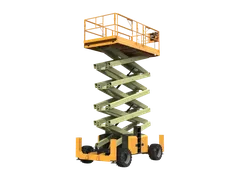
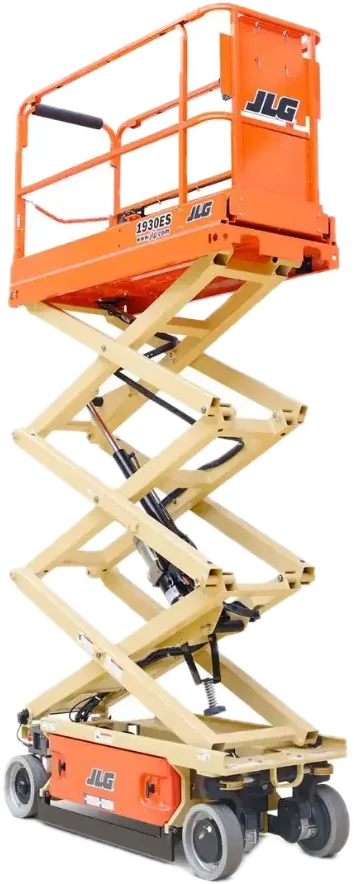
- Scissor lift: raises its platform straight up. Good for work directly above the machine.
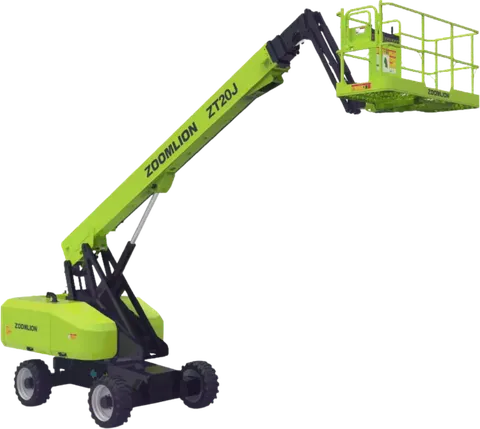
- Boom lift (man lift): can reach up and out, over obstacles.
- Spider lift: a compact tracked boom lift for tight access, such as courtyards, atriums and narrow gates.
- Scaffold: a built working structure along a wall or around a frame. Formwork and shoring are also built structures, but they hold up concrete or a structure, not people at work.
- Mobile scaffold tower: a small scaffold on wheels, moved by hand between jobs, with nobody and nothing loose on it.
- Suspended platform (gondola): hangs from roof-level supports by wire ropes and travels along a facade.
How do you choose between a machine and a built structure?
Start with the four job questions.
- How long? Days or a few weeks usually point to a machine. Months usually point to a built structure.
- How many people and trades? One or two people at a time suit a platform. Several trades on the same face suit scaffolding.
- How much material? A platform has a limited load. Heavy stacking of blocks, panels or pipes needs a scaffold designed and rated for that load.
- Where can it stand? A machine needs a route and a firm base. A scaffold needs a base too, but follows the wall.
Short, mobile jobs across a large area usually suit a powered platform: ceilings, lighting, ducting or painting a hall. Long jobs with heavy material and many trades on the same face usually suit scaffolding.
Tip. If the work moves every hour, use a machine. If the work stays in one place for weeks, build a structure.
Three examples show how the questions work together:
- Replacing lights in a large warehouse: one crew, light material, work spread over the floor, a firm slab. A scissor lift fits, and it moves with the crew.
- Repainting a six-storey facade over two months: several trades, heavy paint and tools, work stays on one face. A scaffold fits. If the roof is known to carry the load, a suspended platform is the other option.
- Fixing signage in a narrow courtyard: one person, small tools, a gate too narrow for a normal lift. A spider lift fits, if the ground is stable.
Comparison: which option fits which job?
| Option | Fits best | Needs from the site | Watch out for |
|---|---|---|---|
| Scissor lift | Ceilings, lighting, ducting, large halls | Firm, level floor; clear route and doors wide enough | No reach sideways; limited platform load |
| Boom lift | Reaching over obstacles, steel, signage | Firm ground; space to swing the boom | Overhead obstacles and power lines |
| Spider lift | Tight yards, atriums, narrow gates | Small footprint, but still stable ground | Smaller platform and limited material |
| Scaffold | Long jobs, many trades, heavy materials | Base that carries the load; time to erect | Erection quality and inspection |
| Mobile tower | Short jobs in one room, moved by hand | Level floor | Moving it with people or loose material on board; follow the supplier's instructions |
| Suspended platform | Facade cleaning, painting, repair, glazing | Roof supports or anchorages verified for the load | Roof structure unknown until too late |
What does each option need from the site?
Check the site before you choose, not after the delivery arrives.
- Ground: machines and scaffold bases need firm, level ground that can carry the load. Soft fill, trenches, drains and basement slabs are common traps. Ask the supplier for the machine's weight and wheel or foot load, and ask a site engineer if the ground is in doubt.
- Space and route: measure doors, gates, lifts and ramps on the way in. A machine that cannot reach the work is useless.
- Power: some machines run on batteries and need a charging point. Others are engine-driven, usually diesel, which is not suited to enclosed spaces because of exhaust fumes. Ask the supplier which type fits an indoor job.
- Roof anchor points: a suspended platform needs roof supports, counterweights or anchorages that are designed and verified for the load. So the roof structure must be known before the platform is chosen.
Wind, dust storms, uneven ground and nearby overhead power lines affect every kind of equipment here. The manufacturer's limits and the site rules decide when work stops. Agree the stop rule before work starts, not on the day.
Who may erect, operate and inspect each kind?
- Scaffold: should be erected, altered and dismantled by competent, trained people, and checked before use. Do not let trades change it themselves.
- Powered platform: should be operated only by a trained operator who is familiar with the manufacturer's manual. Follow the manufacturer's and site rules on fall protection, such as a harness and lanyard where they are required, and on rescue if the machine stops.
- Suspended platform: installed and used under the supplier's instructions, by trained people, with the roof supports checked for the load and a rescue plan agreed before work starts.
Requirements for training, permits and inspection differ by project, site owner, municipality and insurer. Confirm them before mobilising, and ask for papers in writing.
What mistakes turn a simple access job into an incident or a delay?
| Mistake | Fix |
|---|---|
| Choosing the equipment before measuring the site | Walk the route and the work area first |
| Booking a lift for a job that lasts months | Compare it with scaffolding for long jobs |
| Not knowing the roof structure before booking a suspended platform | Get the roof checked and the supports defined first |
| Moving or altering a scaffold without the erector | Only competent people alter it |
| Working through wind or a dust storm | Follow the manufacturer's limits and stop |
| Forgetting overhead power lines | Survey the area and keep clear |
| Using the platform for heavy loads | Check the marked limit, never exceed it |
| Skipping the daily check | Inspect before each shift |
Which guide should you read next for your job?
- Ceilings, lighting, ducting or halls: scissor lift or man lift.
- Long facade, many trades, heavy material: scaffolding types.
- Concrete structures and temporary supports: formwork and shoring.
- Before anyone climbs a scaffold: scaffold inspection checklist.
- Before the first lift of a shift on a scissor or boom lift: pre-use inspection and limits.
- Anything with an operator: how to check an operator's competence.
- Every shift, whatever the equipment: daily walk-around inspection and defect reporting.
How to do this on Maedah
Put the whole job in one request on Maedah. Lifts, scaffolding and suspended platforms can share a single project request. Add the city and site on the map, the dates, and the working height and reach. Mark whether you need an operator or an erection crew. Sealed quotes line up side by side, so compare what each one includes, then agree the details with the supplier. To see options first, browse scissor lifts, scaffolding or suspended platforms.