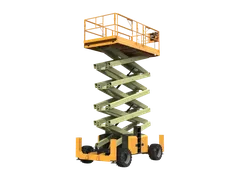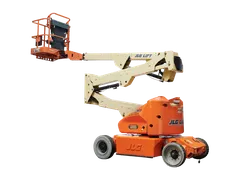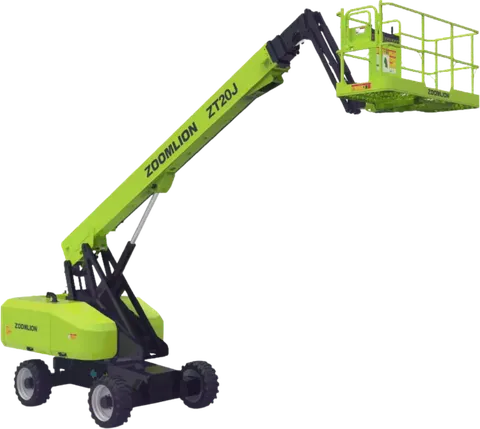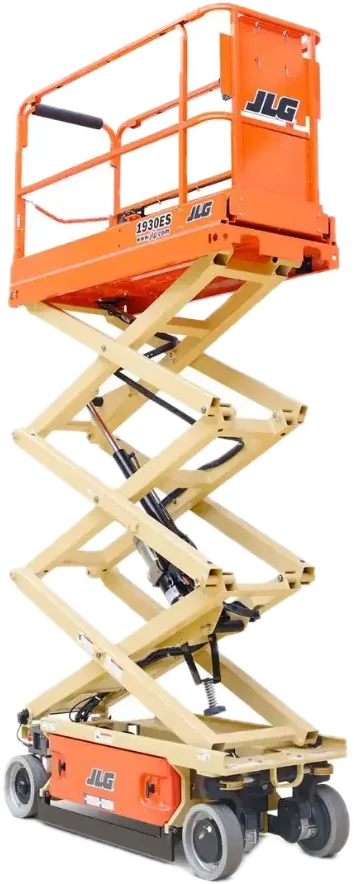
This guide is for the operator or supervisor who has just received a scissor lift or boom lift (often called man lifts) and must sign it on to the job. Use the scissor lift pre-use inspection below at the start of each shift. Then use the limits table to decide, at any moment, whether the work is still allowed.
Who may operate the lift, and what must they read first?
Only trained and authorised operators should use a scissor or boom lift. Training on one model does not automatically cover another, so the operator must also be familiarised with the machine on site.
Before the first shift, read the manufacturer's manual and the site rules. If this guide and the manual disagree, the manual and the site rules win.
Note. Ask the supplier to hand over the manual with the machine, and ask who on site has been briefed on it. To check a person's skills, see how to check an equipment operator's competence.
What does a scissor lift pre-use inspection check around the machine?
Start on the ground, with the machine switched off and the platform fully lowered. Walk all the way round it, then look underneath. This is one part of the wider routine in daily walk-around inspection and defect reporting.
- Tyres or tracks: damage, cuts, missing parts or anything loose.
- Leaks: hydraulic oil or fuel on the machine or on the ground below it.
- Structure: the scissor arms or the boom, and the pins that hold them. Look for cracks, bends, missing pins or signs of unapproved weld repairs.
- Outriggers or stabilisers, where fitted: condition, and that they are stowed or set as the manual says.
- Power: battery condition and charge, or fuel level.
- Surroundings: holes, soft ground, debris, other vehicles and overhead obstacles in the working area.
- Boom lifts only: the tail swing and counterweight can crush a person or hit an obstacle. Keep people and obstacles clear of them, and check the swing path before you rotate.
On a dusty site, wipe the load plate, labels and sensors first.
What do you check at the controls and in the platform?
Climb in using the access the machine provides, then look at the floor you will stand on and the controls you will use.
- Guardrails are complete and undamaged, and the entry gate or chain closes and latches properly.
- The floor is clean, dry and free of oil, tools and loose material.
- Control levers and buttons are all present, return to neutral and are clearly labelled.
- Warning labels, the load plate and the manual holder are present and readable.
- Harness: on a boom lift, the platform normally requires a harness on the designated anchor point, so check the anchor, harness and lanyard. On a scissor lift, follow the manual and the site rules on whether one is required.
A missing or unreadable load plate is a reason to stop. You cannot respect a limit that you cannot read.
What function tests do you run from the ground and from the platform?
Run the function tests before the first lift of the shift, using the manual's procedure, in a clear area. A typical order is below.
- Ground controls: confirm they work and that they can override the platform controls, as the manual describes.
- Platform controls: test each movement slowly, at low height, and check that it matches its label.
- Emergency stop: test it at both the ground and the platform stations.
- Emergency lowering: confirm you can bring the platform down if power fails, and that the ground crew knows how.
- Alarms and warnings: check horns, beacons and warning lamps, and confirm the machine shows no fault, including for the tilt and overload systems if fitted. Test them only as the manual describes; never overload or tilt the machine to prove a sensor.
If any test fails, stop. Do not work around it.
Watch out. Agree a rescue plan before the first lift. Someone on the ground must know how to lower the platform and who to call if the operator cannot.
What are the operating limits: load, people, wind, ground, slope and overhead lines?
These limits come from the manufacturer and the site. This guide gives no numbers, because the correct figure depends on the model. Read each number from the machine or the manual, and write it on the daily check sheet.
| Limit | Rule | Where to find the number |
|---|---|---|
| Load | Workers, tools and materials together must never exceed the rated platform load | Marked on the machine and in the manual |
| People | Never more than the marked number on the platform | Marked on the machine |
| Wind | Wind pushes on the platform, the people and the materials. Stop and lower in strong wind, dust storms or lightning. Some machines are approved for indoor use only | Manufacturer's maximum for outdoor use, or the indoor-only marking |
| Ground | Firm, level ground that the manufacturer allows. Keep away from holes, drop-offs, trench edges and soft ground | Manual and site rules |
| Slope | Never raise the platform on a slope beyond what the manual permits | Manual |
| Reach (boom lifts) | Work only inside the working envelope in the manual. Where the rated load depends on boom position, read the load plate and manual before you extend | Load plate, envelope diagram and manual |
| Overhead lines | Treat lines as live. Keep a safe distance from power lines and obstacles, and check overhead before you raise | Site rules and the site owner |
Ground that looked firm in the morning can be soft after wash-down, a leak or a trench backfill. Look again each time you move.
Example: say the load plate shows 450 kg and 2 people. Two workers at about 90 kg each, a tool bag at 15 kg and a box of cable at 40 kg come to 235 kg, which is inside the limit. A third person would break the two-person limit, and a 250 kg pallet would take the total to 485 kg, which is over.
Barricade or mark the area below the work zone so people and vehicles stay out. Also watch for crush points against ceilings, beams and structure: an operator can be trapped between the platform and a fixed object. When you leave a boom lift, return the boom to the stowed position and switch off, as the manual says.
What should you never do with a lift?
- Climb over the guardrails or stand on them.
- Use the platform or boom as a crane, or hang or hoist loads from it.
- Bypass or disable a safety device, alarm or sensor.
- Drive or move the machine with the platform raised, unless the manual allows it.
- Add extensions or accessories the manufacturer has not approved.
- Step off the platform at height unless the manual and site rules allow it.
- Leave the machine unattended with the platform raised.
When do you tag the machine out and who do you tell?
Tag the machine out as soon as you find a safety defect: a failed test, a leak, a cracked part, a damaged guardrail, a missing pin or a disabled sensor. Remove the key where there is one, attach a clear "do not use" tag, and tell your supervisor.
If the machine is rented, also tell the supplier what you found, where and when. Photos help. Keep the machine out of use until it is repaired and a competent person has checked it.
Record the check each shift, even when everything passes. For paperwork on the machine itself, see what to check on lifting equipment inspection certificates.
How to do this on Maedah
Choose the machine first. If you are unsure between a scissor lift and a boom lift, read scissor lift vs man lift. For height and power, read how to choose a scissor lift.
Then post a request with the machine, quantity, city, site and dates, plus requirements such as an operator or insurance. In the sealed quotes, compare what is included, and ask the supplier in chat for the manual, the latest inspection record and a handover briefing. Browse scissor lifts or man lifts if you want to start from listings.