You have chosen the machine type. Now you must decide whether to buy it new or used, and justify the choice to an owner, a client or a finance team. This guide is for owners and procurement leads. It turns the choice into four facts you already know about your own work.
Which four questions decide it for my business?
Neither "new is always more reliable" nor "used is always cheaper to run" is true by itself. What decides it is how your own work looks, so answer each question honestly before you look at any offer.
- How many hours a year will it work? Estimate it for one typical year: working days times hours per day. Few hours means the fixed costs (capital, insurance, storage) are spread over little work. A lower purchase price, or renting, keeps those costs smaller.
- What does an idle day cost your project? Add up one day of the crew waiting, a substitute machine if you must hire one, the delayed handover and any contract penalty. That sum is what reliability is worth to you.
- Do you have mechanics and a workshop? A used machine needs someone who can find faults early and fix them. Without that, you depend on outside service every time.
- Is the work long-term or one project? A single project ends. A new machine's longer life only pays back if you have work for it afterwards. You can sell a machine when the project ends, but resale depends on the market, so do not count on it.
Now mark which column each of your answers falls in:
| Question | Points to new | Points to used or renting |
|---|---|---|
| 1. Hours per year | Many (needs a reliable, well-supported machine) | Few |
| 2. Cost of an idle day | High: one stopped machine stops the site | Low: you have a spare or can hire one |
| 3. Workshop and mechanics | None | Your own mechanics and workshop |
| 4. Job length | Years of steady work | One project |
High hours point to a reliable, well-supported machine; that is often new, but not always.
Tip. Three of four in one column is a strong signal. If one answer is extreme (for example an idle day that costs more than the machine's monthly cost to own), give it more weight. If it is 2 and 2, compare with renting first: read rent or buy heavy equipment. If the used-or-renting column wins, compare buying used with renting before you commit.
New vs used heavy equipment side by side: warranty, availability, risk, parts
| Factor | New | Used |
|---|---|---|
| Warranty | Manufacturer warranty, usually. Terms differ by brand and model | Often none, or only what the seller offers. Get it in writing |
| Availability | May need ordering, shipping and delivery time | Often available quickly |
| Upfront cost | Higher | Lower |
| Condition risk | Usually lower at the start | Depends on records and inspection |
| Parts and service | Depends on the dealer network in the country | Depends on the model. Older models can have parts that are harder to find; ask the dealer |
| Resale | Depends on the market when you sell and on your records. Keep service records for either | Depends on the market and on the records you can show a buyer |
| Documents | Normally supplied with the machine | Must be checked, and some may be expired |
The "Parts and service" row is the one buyers often overlook: a well-supported older model can be easier to keep working than a new model with no local dealer. Heat, dust and sand are hard on machines in the Kingdom, so ask how a used machine was kept and serviced.
Watch out. A used lifting machine or generator can need the same documents and inspection certificates as a new one before it is allowed to work. Requirements differ by project, site owner and insurer. Ask what is current and what must be renewed, and who will pay for it. Never put an uncertified lifting machine to work; see what to check on lifting equipment inspection certificates.
When does new make sense, and when used?
The four questions and the table above do most of the work. Two points they do not cover:
- Your client or insurer asks for a recent model. Then new, or nearly new, may be a condition of the work. Ask before you shop, and get it in writing.
- Whether you can wait for an order. If the machine is needed on site now, a used or ex-rental machine that is available quickly may be the only practical choice.
A common mistake with new is to ignore the warranty terms: a warranty you cannot use in your city has little value. The common mistake with used is to judge by the low price alone. A machine with no records is a gamble, so ask for the service history, then have it inspected. The full process is in buying used heavy equipment step by step, and what the hour meter really tells you is in hours vs age.
What about nearly-new, ex-rental or reconditioned machines?
Ex-rental and nearly-new units with a full service history are a middle path: lower upfront cost than new, and a better-known past than most used machines. Even so, do three things:
- Inspect the machine yourself or send someone qualified.
- Get the service history confirmed in writing, not only in conversation.
- For a reconditioned machine, ask exactly what was repaired or replaced, by whom, and what proof exists.
An ex-rental machine may have had many users. That is fine if it was serviced on schedule, but it makes the records more important.
Note. This guide does not cover how to pay. For cash, finance and renting questions, see buying equipment: cash, finance or rent. For what a machine costs to run, see what drives operating costs.
What does the decision look like in two examples?
These are examples, not rules. Score your own answers the same way, using the table above.
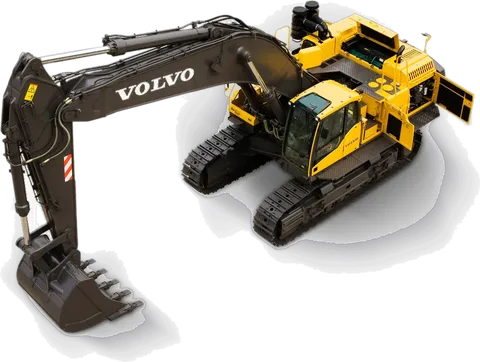
Example 1. A contractor needs an excavator for about six weeks of site preparation, then has no further work for it. That is few hours in a year (question 1: used) and one project (question 4: used). A stopped machine would hold up the site (question 2: new) and there is no workshop (question 3: new). That is 2 and 2, so compare renting with buying before you decide. Next, get a rental quote for six weeks and set it against the cost of owning the machine for the same period.
Example 2. A company has steady work all year, so the machine will work many hours (question 1: new). It keeps a spare machine, so an idle day costs little (question 2: used). It has its own mechanics (question 3: used). It has no work committed beyond this year (question 4: used). That is three to one for used. The company can absorb the repair risk itself, so a well-supported used machine is reasonable here. High hours are the reason to check parts and service first.
How to do this on Maedah
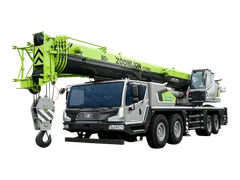
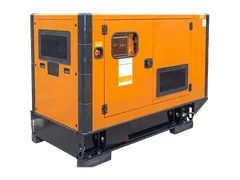
On Maedah, machines for sale and for rent are in one place. Browse listings under lifting equipment, excavation equipment or power equipment, and compare specs, photos and city.
If you are still unsure between buying and renting, post a request with the machine, quantity, city, dates and requirements. Sealed quotes come back side by side, so you can compare what is included. Agree price, warranty and payment directly with the supplier. Maedah does not process payments.