Suppliers answer a lifting request with "wanash" or "crane", and each word can mean more than one machine. This guide is for site, project and procurement teams who must choose between a boom truck vs mobile crane before asking for quotes. It clears up the words, then gives four questions that settle the choice for your lift.
What do people mean by "wanash", boom truck and crane?
In everyday Saudi speech, the Arabic word ونش (wanash) is often used for several different machines:
- a crane mounted on a truck, often called a boom truck or loader crane. The names overlap, and a larger truck-mounted crane may be charted like a mobile crane.
- a truck with a winch, or a recovery truck.
- a winch itself.
So a supplier who says "I have a wanash" may mean a lifting machine or something that only pulls. The word "crane" (كرين) is used loosely too. A request that says only "wanash, tomorrow" invites the wrong truck.
Describe the job instead: what you are lifting, how heavy it is, where it must go, and how far the machine must reach.
What is a boom truck good at?
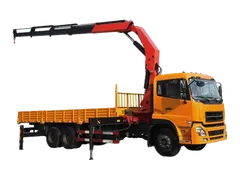
A boom truck carries a boom on a truck chassis. The boom may be telescopic, which extends in sections, or knuckle (articulating), which folds in joints. Many boom trucks can also carry material on the bed.
That is the main advantage: one machine delivers the load and places it. You do not need a separate truck and crane, and you do not need to wait for the two to meet on site.
This suits jobs such as:
- placing pipes, steel sections or plant on a site.
- loading and unloading.
- setting small items on a roof or a platform within the boom's reach.
Loader cranes on boom trucks are commonly rated by lifting moment in tonne-metres. That figure alone does not tell you how much can be lifted at a given reach. A moment rating combines weight and distance, so the same machine lifts much less when the load is far out. Ask for the chart.
What does a mobile crane do that a boom truck cannot?
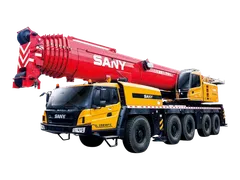
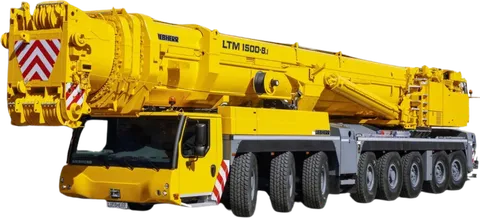
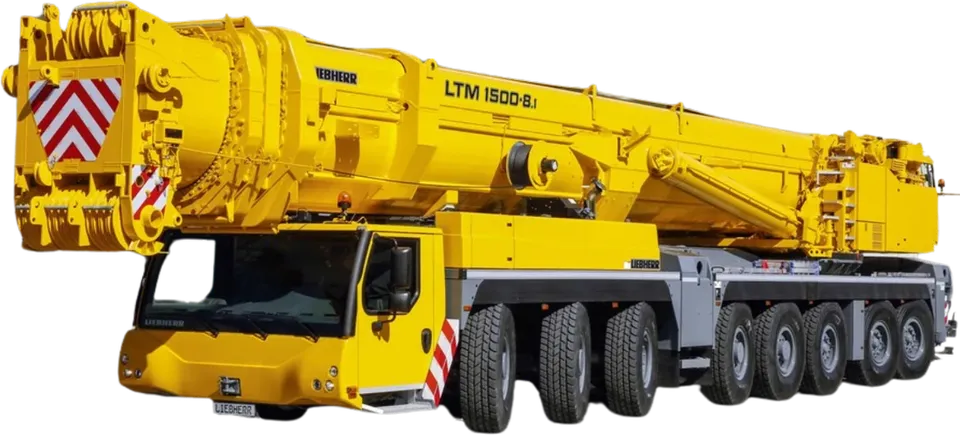
A mobile crane is built mainly to lift. It has a purpose-built carrier and, in general, a longer reach and a higher capacity range than most boom trucks.
Reach for a mobile crane when the lift is heavy, the load must go far out or high up, or the lift needs the stability and range that a lifting-first machine offers. It does not normally carry your material, so you may need a separate truck to bring it.
For other crane types, see types of cranes and when to use each. If the question is a long stay on soft ground, read mobile crane or crawler crane.
Boom truck vs mobile crane: side-by-side
| Question | Boom truck | Mobile crane |
|---|---|---|
| Main purpose | Carry and place material | Lift |
| Carries material on the bed | Many can | Normally no |
| Reach and capacity range | Shorter, lower than most mobile cranes | Longer, higher |
| Best for | Light loads, short reach, delivery plus placing | Heavy, high or far-out lifts |
| Capacity figure | Often a lifting moment in tonne-metres | Load chart by radius and boom |
Two things are the same for both, so they do not decide the choice. Both normally lift from fully extended outriggers on firm, level ground. Either may need a rigger and a signaller as well as the operator. Neither column is "better": each is right for a different lift.
A simple rule to choose
Both machines are governed by a load chart. Capacity falls as the load moves further out, so the weight and the reach of the lift decide the choice. Use these questions in order:
- How heavy is the heaviest piece, including its rigging? Use a known weight (from the maker's data or a weighing), not a guess. Ask the supplier whether the chart already deducts the hook block; slings and spreaders count as load.
- How far from the machine must it be placed? Measure from the machine's centre of rotation to the load, not from the truck's edge, and check the pick-up position as well as the final position. Radius depends on where the machine can actually stand, so look at access and space first.
- How high must it go? Height and reach together set the boom length.
- Does the same machine also have to carry the material? If yes, that points toward a boom truck.
Then read the rule:
- Lighter load, shorter reach, and the machine must also transport the material: a boom truck makes sense.
- Heavier load, longer reach or greater height: a mobile crane.
- Somewhere in between: ask each supplier to show the chart for the exact machine at your radius and height, and let the chart decide.
For example, unloading a bundle of pipes beside the truck, at a short radius and with the pipes arriving on the same truck, is the kind of job a boom truck suits. Setting a plant unit on a roof, with the machine parked well back from the building, adds height and radius and points toward a mobile crane. In both cases the chart for the exact machine still has the final word.
Watch out. Do not choose by a capacity number on the side of the truck. Maximum capacity applies only at the shortest radius. Always check the chart at your radius, and never lift beyond what the manufacturer's chart allows.
For how to read the chart, see crane load chart explained. To size the lift itself, see how to choose crane capacity.
Mistakes that cause the wrong machine to arrive
Using only the word "wanash". The fix is to write the job and the machine type: "boom truck to lift and place" or "mobile crane for a lift".
Quoting weight but not reach. A load that is easy at a short radius can be out of range further out. Give both numbers.
Forgetting the ground. Both machines normally lift from extended outriggers on firm, level ground. Lifting "on rubber", without outriggers, is only acceptable when the manufacturer's chart for that exact machine and configuration allows it. Tell the supplier about soft sand, slopes, trenches or underground services near the lift position, and ask whether outrigger pads or mats are needed.
Assuming the crew is included. A rigger and a signaller may be needed with either machine. Confirm what the supplier's crew includes and who arranges the rest.
Questions to ask before you confirm either one
- Is this a boom truck, a mobile crane, or a winch or recovery truck?
- Can you send the load chart for this exact machine?
- What is the capacity at my radius and height, with the boom length you would use?
- Does the machine also carry material, and how much?
- Will it lift on outriggers? What ground and space does it need?
- Who is the operator, and is a rigger and a signaller included?
- Who prepares the lift plan, and who is responsible for the lift on site?
Requirements differ by project, site owner, municipality and insurer, so confirm them before mobilising. Operator papers, inspection certificates and arrival times are covered in how to rent a mobile crane in Saudi Arabia.
How to do this on Maedah
On Maedah you can describe the lift once and let suppliers answer with their own machines. In the request form, pick boom trucks or cranes, set the city and site on the map, and add the dates. In the notes, write the weight, radius, height and whether the machine must carry material.
Sealed quotes come back side by side. Compare what each supplier includes, such as the operator, rigger and signaller, and ask for the load chart in chat. Agree price and payment directly with the supplier you choose.