You have a load to lift and no crane type yet. This guide explains the main types of cranes and their uses, so the quotes you ask for are for the right machine.
The main types at a glance:
- Mobile crane: wheeled, road-going, sets up on outriggers. Few lifts and short jobs.
- Crawler crane: runs on tracks. Heavy or repeated lifts in one area; arrives in pieces.
- Tower crane: fixed on a foundation. Tall buildings with many lifts.
- Spider crane: compact and tracked. Tight access or indoor work, light lifts.
- Boom truck: a crane on a truck bed. Delivers and places materials, lighter lifts.
What does a crane do, and what limits it?
This guide covers cranes hired for site work. Three things limit any type:
- Radius. The distance from the crane's centre of rotation to the load. The further out the load, the less the crane can lift.
- Boom length. A longer boom reaches higher but often lifts less at the same radius.
- Ground. The crane's weight and the load pass through outriggers or tracks into the soil. Soft or uneven ground is a hazard on every type, and loose sand or backfill often needs crane mats.
Mobile cranes: all-terrain, rough-terrain and truck-mounted
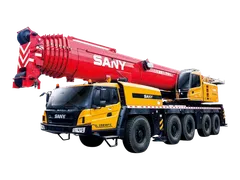
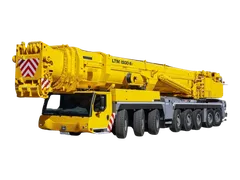
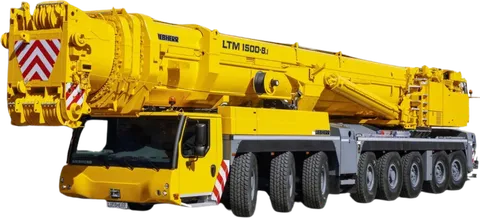
A mobile crane travels on roads and sets up on outriggers, which are extendable legs that spread the load into the ground. There are three main sub-types.
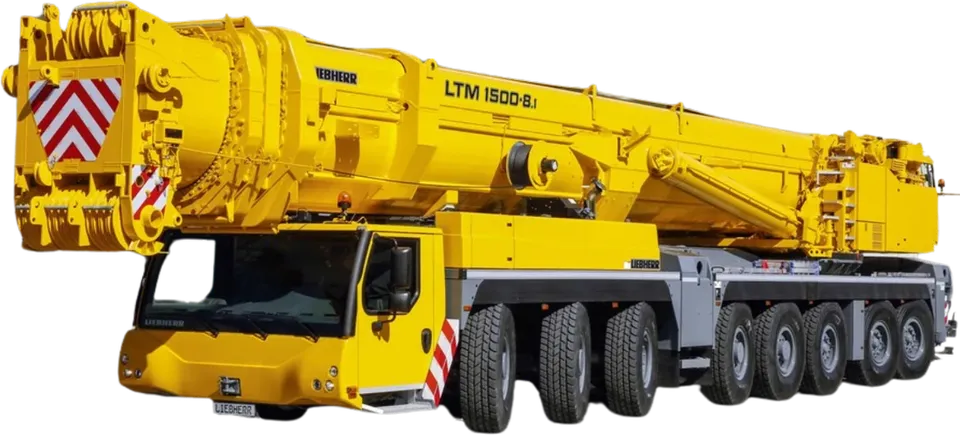
- All-terrain. A multi-axle carrier built for road travel, with many steering modes for tight turns.
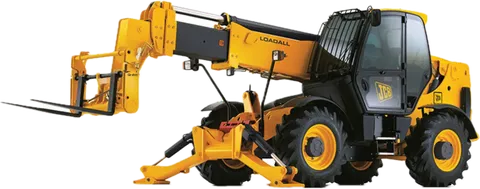
- Rough-terrain. One cab for driving and operating, on a carrier made for site ground. It is slow and not made for long road journeys.
- Truck-mounted. A crane on a standard truck chassis. It travels at road speed and suits short jobs at several locations.
Cranes are also split by boom type. A telescopic boom extends in sections and is quick to set up, so it is common on mobile cranes. A lattice boom is assembled from steel sections, which takes longer. It is common on crawler cranes.
To hire one, see how to rent a mobile crane in Saudi Arabia.
Crawler cranes: when tracks beat wheels
A crawler crane runs on tracks. Its tracks spread the weight over a larger area, and it usually lifts without outriggers. This often suits softer ground, though the ground must still be checked and the track bed must be level.
A crawler usually arrives in pieces on trailers and needs assembly on site, including its lattice boom. For a closer comparison, read mobile crane or crawler crane: which fits your site. You can also browse crawler cranes listed on Maedah.
Tower cranes: tall, fixed and built for a whole project
A tower crane is erected on a foundation and stays in one place for the whole build. It suits height and many repeated lifts, such as steel, formwork and concrete.
It is assembled and dismantled on site, usually with a mobile crane. That takes planning, an engineered foundation, inspection before use, and time at both ends. Tower crane or mobile crane for a building project compares the two, and available units are listed under tower cranes.
Spider cranes and boom trucks: small, tight and light lifts
Spider crane. A compact tracked crane with folding outriggers. It goes where a larger machine cannot: narrow gates, courtyards and, with some electric models, inside buildings.
Boom truck. A crane mounted on a truck bed, often used to deliver and place materials. It generally lifts lighter loads than a mobile crane. Many are loader cranes, often rated by lifting moment in tonne-metres, not one tonnage figure.
Suppliers use "boom truck", "loader crane" and "truck-mounted crane" loosely. A truck-mounted crane is usually charted like a mobile crane; a boom truck is lighter. Ask for the exact machine's load chart. See boom truck or mobile crane: which do you need.
Types of cranes and their uses: which one fits your site?
Work through these four questions, then find your hardest condition in the table.
- Is the load light, medium or heavy, and how far out must it go?
- Can a crane get to the spot and stand on checked ground?
- How high must it reach?
- How many lifts, over how many days?
Question 1, weight and reach. Light means a load a boom truck or spider crane can place at your radius. Heavy means one that needs the load chart of a large all-terrain or crawler crane. If you are unsure, ask two suppliers for the chart figure at your radius.
Height and the number of lifts (questions 3 and 4) mostly decide between mobile and tower, as the tower row shows.
| Site condition | Usually points to | Why | Watch out for |
|---|---|---|---|
| Few lifts, short job, good road access | Mobile (all-terrain or truck-mounted) | Arrives, sets up on outriggers, lifts | Needs space for outriggers and firm ground |
| Rough site ground that can be levelled and compacted | Rough-terrain mobile, or crawler | These can travel over rough ground, but the lift still needs a level, compacted platform | Level and compact the area first; confirm ground bearing with the supplier's outrigger or track loads |
| Soft ground that has been prepared and checked, with heavy or repeated lifts in one area | Crawler | Tracks spread the weight, no outriggers | Arrives in pieces, needs assembly time; crane mats may be needed |
| Heavy single lift, firm ground, road access | Larger all-terrain mobile, or crawler | More capacity at a given radius than a small mobile crane; the chart decides | Confirm the figure on the load chart |
| Tall building, many lifts over weeks | Tower | Height, repeated lifts, fixed position | Needs a foundation, and usually a mobile crane to erect and dismantle |
| Narrow gate, courtyard, or inside a building | Spider (some electric models indoors) | Compact, folding outriggers; some models fit door openings | Limited capacity; check the chart. Indoors, ask the building's engineer if the floor can carry it |
| Delivering and placing materials | Boom truck | Truck carries and lifts | Lighter loads than a mobile crane; check the chart |
Watch out. If two rows fit, plan for the harder one. A crane chosen for the easy part of the site can fail on the hard part.
For example, say you must place rooftop air-conditioning units, each about 500 kg, from a narrow street. A boom truck or spider crane may fit where a full-size mobile crane cannot, but both still need outrigger space, so check the chart at the radius from the one spot where the crane can stand.
What does "50-tonne crane" really mean for your lift?
A "50-tonne crane" can usually lift 50 tonnes only at its shortest radius, in its best set-up. Capacity falls as the load moves out, and a longer boom lowers it again. The name gives a size class, not your lift.
Give the supplier the weight of the load with its rigging, the radius at the pick-up and set-down points, and the height. Then ask for the load chart figure at that radius and height, never by tonnage alone. How to choose crane capacity shows how to measure each figure, and crane load chart explained how to read the chart. Mention anything under the crane (pipes, tanks, basements) or overhead (power lines).
Watch out. Never skip the lift plan, the daily checks or the manufacturer's load chart. Ask the supplier for the current inspection certificate, the operator's qualification and the lifting gear certificates. Requirements differ by project, site owner and insurer, so confirm them before booking. Wind also limits lifting; the crane's manual sets the limit, and dust or poor visibility can stop signalling and rigging.
How to do this on Maedah
Post a request with the machine, quantity, city, the site on the map and your dates. Add the load weight, radius and height in your notes, and mark requirements such as driver.
Suppliers who offer cranes in your city send sealed quotes, side by side. Compare what each includes and the capacity offered at your radius. Agree price and payment with the supplier directly.