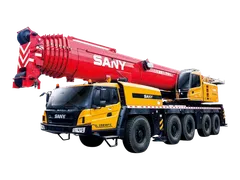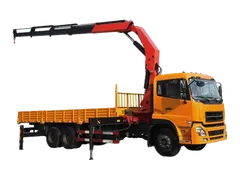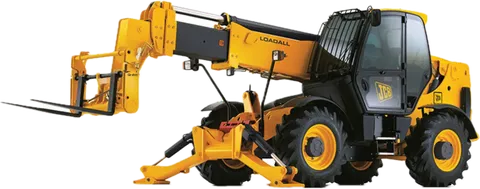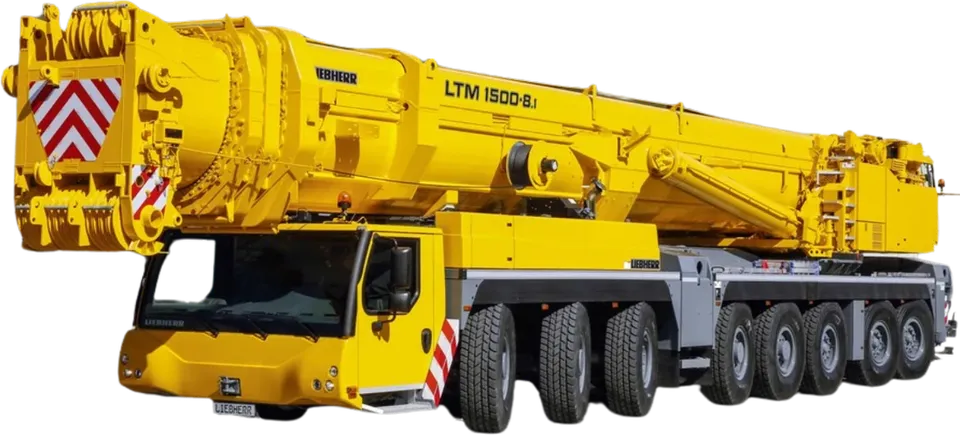
Suppliers will ask for numbers you may not have yet: load, radius, height, ground. This guide is for contractors, facility managers and project buyers who must rent a mobile crane in Saudi Arabia for one lift or a few. It turns the job into request fields, then into the quote checks that matter for cranes, and ends with lift day.
Step 1: Define the lift before you ask for a crane
A weak crane request often starts with "I need a 50-tonne crane". The size in a crane's name is its maximum, usually reached close to the crane with the boom short. Your lift is limited by the heaviest load at its widest radius, not by the biggest number on the side of the crane.
Write down these items for each lift:
- Load weight. Include rigging, spreader beams and anything else hanging from the hook. The chart notes say whether the hook block, extra rope or a jib is already deducted, so ask the supplier to confirm it. How to choose crane capacity shows how to measure each figure.
- Load size. Length, width and height, and whether it can tilt or catch wind.
- Pick position and set position. The crane's radius is measured from its centre of rotation to the hook, so give the distance to both points.
- Hook height. How high the load must go, plus the clearance over buildings, walls or cables.
- Number of lifts and days. One lift, a short series or an ongoing site service.
For example, say a plant unit weighs 6 tonnes, the rigging 0.4 tonnes and the hook block 0.6 tonnes. If the chart does not already deduct the hook block, it must then show at least 7 tonnes at your radius, with the boom length and set-up the supplier will use. A crane that lifts far more than that close in may still fail at your radius.
Tip. Weigh the load, do not guess it. Take the weight from the manufacturer's plate or document, and add the rigging. If the weight is only an estimate, say so in the request.
Step 2: Choose wet hire or dry hire for a crane
Cranes are commonly hired with an operator, and often with a rigger and a signaller. This is wet hire. Dry hire means the crane only, and your own certified people operate it. For buyers who lift only occasionally, dry hire is usually not realistic.
| Option | Best for | Watch out for |
|---|---|---|
| Crane with operator only | Simple lifts where your own trained, competent people rig and signal | Who is responsible for rigging and signalling. |
| Crane with operator, rigger and signaller | One-off or complex lifts, and sites with limited lifting experience | The quote must say how many people come and for how many hours. |
| Crane without operator | Companies with their own qualified operators and procedures | Insurance, competence checks and who carries the risk. |
The common mistake is to assume the crew. One supplier quotes an operator alone, another a full crew, and the cheaper quote only looks cheaper. Ask each supplier to state the crew included. More in wet hire vs dry hire.
Step 3: What to put in a crane hire request
A good request lets a supplier choose the right crane without calling you three times. Include:
- The lift data from Step 1: weight, dimensions, pick and set positions with distances, and the hook height.
- The site location on a map, not only a city name.
- Access conditions. Gate width, overhead lines, road surface, and where the crane can stand.
- Ground condition and outrigger space. A mobile crane spreads its load through outriggers, so tell suppliers if the ground is soft, sloping, paved over services or tight.
- Dates and expected duration, and whether the dates can move.
- Requirements: with or without crew, insurance, inspection, and any client approval you know is needed.
Be honest about the weakest point of the site. Fill, backfill, a slab over a basement or a pipe trench can change which crane is safe. Suppliers who know early can quote the right crane and ground measures such as mats, instead of finding out on the day.
For a full list of what to include in any hire request, see what to write in an equipment rental request.
Step 4: Compare quotes on more than the headline
Cranes with the same tonnage are not the same offer. Check:
| Check | Why it matters |
|---|---|
| Capacity at your radius | Ask for the load chart line for your radius and boom length, in the set-up the supplier will use (outriggers, counterweight). See crane load chart explained. This is the real answer to "can it do the lift?". |
| Crew included | Operator, rigger, signaller, and hours covered. |
| Inspection certificate | Is the crane's inspection current, and when does it expire? |
| Insurance cover | What is covered, and who is covered on your site. |
| Mobilisation and return | Transport to site, assembly, and demobilisation, and whether they are inside the price. |
| Minimum hire period | Suppliers often set a minimum block, even for a short lift. Ask what it is. |
| Delay terms | What happens if weather, access or your own readiness delays the lift. |
Watch out. A cheaper quote for a crane that is too small at your radius is not a saving. It is a quote for a different job.
If one quote leaves out mobilisation or crew, ask for a revised quote rather than guessing. For a general method, read how to compare equipment rental quotes fairly.
Step 5: Confirm certificates, crew and the lift plan
Before you accept, ask the supplier for documents, not promises:
- The current inspection certificate for the crane, with its expiry date (what to check on lifting equipment certificates).
- The operator's qualification (how to check competence), and the rigger's and signaller's if they are included.
- The insurance document that applies to the work.
- A lift plan for the job, or confirmation of who prepares it.
Requirements for approvals and operator qualifications differ by project, site owner and insurer. Confirm them with your client and the supplier before mobilisation, not on the morning of the lift. If the site needs an approved contractor list, a TÜV inspection or a client approval, say so in the request so suppliers can answer it in the quote.
The lift plan covers crane position, ground, exclusion zone and pick sequence. Use the crane lift plan checklist. Agree in writing who plans, who approves and who supervises the lift, before lift day.
Step 6: Lift day, extensions and return
On the day, keep the checklist short:
- Clear the work area, keep non-essential people out of the exclusion zone and confirm access for the crane to arrive and set up.
- Check that the operator and the person directing the lift have the same load weight and radius as the plan.
- Stop the lift if the weight, radius, ground or wind differs from the plan. Replan rather than push on, and never ask the operator to go beyond the load chart or override the crane's safety devices.
- Agree the end time and any extension in writing with the supplier before the crane leaves.
- Confirm the return arrangement, so the demobilisation is as agreed.
Wind can stop a lift of large surfaces such as panels or ducts, so ask the supplier for the crane maker's wind limit for your load. Summer heat affects the crew as well as the machine, so also ask about working hours.
How to do this on Maedah
On Maedah you post the lift once instead of calling around. Create a request and choose the crane type, pin the site on the map and add dates. Then add requirements such as driver included, insurance, TÜV inspection, Aramco approval or Urgent, and write the lift data in the description.
The request reaches suppliers who offer that category and serve your city. Their quotes arrive sealed, so suppliers cannot see each other's prices, and they line up side by side with what is included, response time and rating. Browse cranes or boom trucks first if you want to see what is listed. Maedah does not process payments: you agree price, payment terms and the contract directly with the supplier you choose.