A supplier asks "how many tonnes?" and a wrong answer costs you a crane that cannot do the lift on the day, or far more crane than the job needs. This guide shows how to choose crane capacity when you must answer in writing: what to measure on site, which weights to add up, and what to write in the request.
Why is "a 50-tonne crane" the wrong way to choose crane capacity?
A crane's headline tonnage is normally what it can lift at its shortest radius, close to the machine. The further the hook is from the crane, the less it can lift. A "50-tonne" crane may lift only a small part of that at the distance your site needs.
The load chart, not the name, tells you if the crane can do your lift: it shows what the crane lifts at each radius, boom length and set-up (outriggers, counterweight).
Send only a tonnage and the quotes are for different cranes and cannot be compared. Send the load, radii, height and ground, and each supplier can propose a crane that fits. The five inputs are: load with rigging, pick radius, set radius, hook height, and ground and access. To read the chart itself, see crane load chart explained.
Step 1: What does the heaviest load really weigh, with rigging?
Plan on the load plus everything that hangs from the hook. That includes the hook block, slings, shackles, a spreader or lifting beam, and any attachments.
Take the load weight from a document: the seller's delivery note, the manufacturer's data sheet or a drawing. Do not estimate by eye. Check what that weight includes: empty or filled, with or without packaging, a shipping frame or attached parts. If unsure, ask the manufacturer or seller to confirm the weight as it will hang from the hook.
If no document exists, ask the lifting contractor how they will establish the weight before lift day. The lifting contractor is the company responsible for planning and carrying out the lift. This is often the crane supplier if you hire with an operator.
For example, say a plant item weighs 8 tonnes on its data sheet, and the spreader, slings and shackles weigh 1.2 tonnes. The chart check uses 9.2 tonnes, not 8, plus the hook block unless the supplier says the chart already deducts it. Never assume rigging is light: give both weights separately.
Step 2: Where does the crane stand, and how far is the pick and the set?
Radius is the horizontal distance from the crane's centre of rotation to the hook. Capacity falls as radius grows. Mark the position you propose on the site plan. The supplier may suggest a better one, and the radii will change with it. Then measure two radii from that centre, not from the edge of the machine:
- Pick radius: from where the crane stands to where the load starts, for example the delivery truck.
- Set radius: from the same crane position to where the load must be placed.
The heaviest lift is not always the furthest lift. A lighter load placed far away can be the governing case. Check each lift at its own radius and weight, and size the crane for the worst one.
If the crane must move between pick and set, give both positions, because each has its own ground and access questions in Step 4.
Step 3: How high does the hook need to go?
Height limits a lift as well as weight. A longer boom, or a jib added to it, reaches higher but normally lowers the capacity at a given radius. A crane that passes on weight with a short boom may fail once the height forces a longer one.
Write down the height the top of the load must reach above ground at the set point. The hook must be higher than that by the length of the slings or spreader. Also give the load's length, width and height, because they decide what must be cleared. Ask the supplier to confirm that the boom tip still clears the hook block at that height.
Then list anything the load or boom must clear, such as a building edge, formwork or power lines. Tell the supplier about overhead lines early. Safe clearances are set by the utility and the site rules, so ask for the figure and confirm it before mobilising.
Step 4: What does the ground and access allow?
Ground and access can overrule the chart. Answer these before you choose a crane:
- Can the crane reach its position by the road or track, including gates, bends and ramps?
- Is there room to extend the outriggers fully? If the chart needs full outriggers, a partly extended crane cannot use those figures.
- Can the ground carry the crane? Fill, soft sand, a basement slab or buried services below the surface can all be a problem.
- Will mats be needed under the outriggers or tracks? Ask the supplier for the outrigger or track loads and the mat sizes. Ask the site owner or engineer what the ground can carry.
- Wind: a crane has a wind limit, and a large load catches wind. Ask the supplier for the limit that applies.
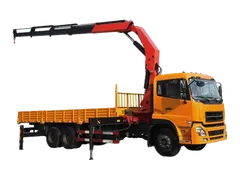
Types differ here. A crawler crane spreads its weight over its tracks but still needs firm, level ground. A boom truck also needs outriggers, and its reach is usually shorter. See types of cranes and when to use each and boom truck or mobile crane.
Step 5: Check the chart and keep a margin
The supplier checks your five inputs against the load chart for the crane, boom length and outrigger setting they plan to use. For each lift, the chart capacity at that lift's radius, for that configuration, must be above that lift's total load, including rigging. The lift with the smallest gap sets the crane.
The chart already includes the maker's stability margin, so never plan past it. Many lifting contractors and site rules add a further margin; they set its size, so ask for it rather than assuming a number.
For example, say the worst case is the 9.2-tonne lift from Step 1, at a radius where the chart allows 12 tonnes. Only the lifting contractor can say if that gap is enough. If the chart allowed 9.5 tonnes, the margin would be very thin: ask about a different crane or a closer crane position.
Watch out. This guide helps you write a good request. It does not replace the supplier's own chart check, a written lift plan, a valid inspection certificate for the crane and a competent operator and lift supervisor.
The crane lift plan checklist covers the written plan to prepare before lift day.
What should the request say?
For example, a request could say:
- Load: 8 t item plus 1.2 t spreader and rigging, from a data sheet.
- Pick radius: 14 m at the delivery truck.
- Set radius: 22 m from the same crane position. Mark both radii and the crane position on the site plan.
- Hook height: top of load must reach 15 m above ground; slings and spreader 3 m, so hook height 18 m; load 4 m long, 2.5 m wide, 2.5 m high; roof edge to clear.
- Ground and access: compacted sand yard, a basement slab near the set point; one site gate, and the crane arrives on a public road.
These figures are only an example. Replace them with your own measured values.
How to do this on Maedah
Open the request form, choose the crane category, and add your city, the site on the map and the dates. Include the numbers in your request; the general rules are in what to write in an equipment rental request.
Sealed quotes come back side by side. Compare what is included, such as operator and rigging, then use chat to ask each supplier to confirm their crane against the chart for your numbers. For the whole process, read how to rent a mobile crane in Saudi Arabia. Browse the cranes category if you need it.