This is for homeowners, farm owners and small contractors with a trench, a small foundation or yard work, who have been told "the JCB does everything". It does many things, but not every job suits it. The guide settles the mini excavator vs backhoe loader choice from your site, not from the machine name.
Mini excavator vs backhoe loader: what is the real difference?
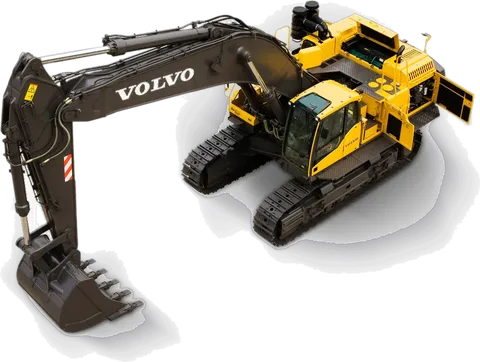
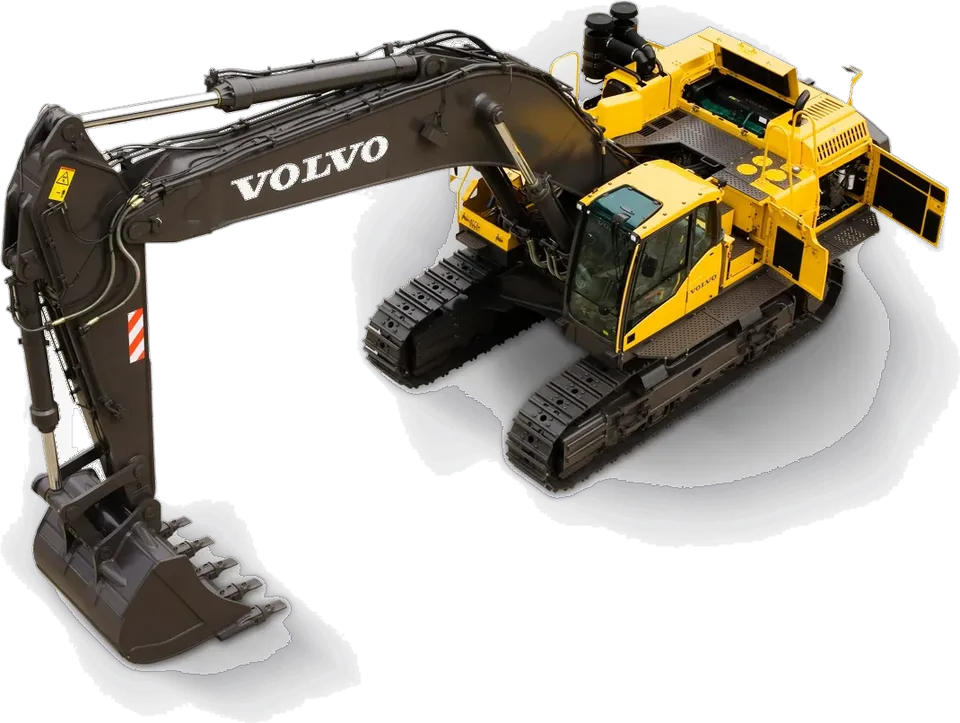
A mini excavator is a compact machine on tracks. Its upper part, with the cab and the arm, turns a full circle on the undercarriage. It has a small footprint and spreads its weight over the tracks, so it usually presses less on the ground than a wheeled machine. Many models have a reduced tail swing, which means the back of the machine stays close to its tracks when it turns. That lets you work closer to a wall, but the boom and arm still swing, so check the clearance on site.
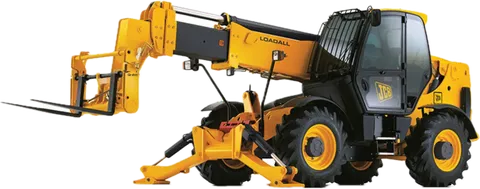
A backhoe loader has wheels. It has a loader bucket at the front and a digging arm at the back. The digging arm swings through an arc, not a full circle. For digging, the operator puts the stabilisers down to hold the machine steady. To dig in a new spot, the machine has to be repositioned, and this happens more often than with a mini excavator.
For the wider picture of all machines on an earthmoving site, see which earthmoving machine does what.
Side by side: digging, loading, travel, space and ground
| Mini excavator | Backhoe loader (JCB) | |
|---|---|---|
| Moves on | Tracks | Wheels |
| Digging arm | Turns a full circle | Swings through an arc, stabilisers down |
| Loading a truck from a pile | Possible but slow | Strong point, with the front bucket |
| Space needed | Small footprint, often reduced tail swing | Larger, needs room to position and set stabilisers |
| Soft or finished ground | Low ground pressure on soil; ask for rubber tracks or pads on paving | Wheels can sink in soft soil; stabiliser feet concentrate load, so ask for pads on paving |
| Precision in tight spots | Strong point | Less precise |
| Between nearby sites | Usually moved on a trailer | Can often drive on wheels, if allowed |
| One machine, many small jobs | Digging mostly | Dig, load, backfill, carry; towing only if fitted and allowed |
Which one for trenching and tight spaces?
Choose the mini excavator when the digging itself is the hard part.
- Narrow access: a gate, a passage between buildings or a yard with a wall on one side.
- Work close to walls: a reduced tail swing model can turn with less of the back sticking out past the tracks. Ask whether the machine you are offered has it, and keep people and fragile structures out of the swing area.
- Finished or soft ground: tracks and a small footprint usually spread weight well on soil and gardens. On paving, ask for rubber tracks or pads (steel tracks can mark it), and ask for pads under the stabilisers of a backhoe loader. Very soft ground may still need mats or a firmer working platform, so ask the supplier.
- Precise trenches: pipes and cables near existing lines need careful, small movements.
A backhoe loader can dig a trench too, but it needs room for the stabilisers and is repositioned along the trench. In a tight yard that adds time and risk.
Watch out. Before any digging, find out where buried services run (water, power, telecom, sewer). Ask the site owner or the relevant utility for plans, follow the site's permit rules, and dig by hand or with the utility's guidance near marked lines. Look up for overhead lines too, before the boom or loader arm is raised.
Watch out. Trenches can collapse. Keep people out of a trench unless it has been sloped or supported as the site's safety rules require, and keep spoil, vehicles and the machine back from the edge.
Which one for mixed jobs: dig, load, carry and move around?
Choose the backhoe loader when the digging is only one part of the day.
A typical day on a small project: dig a trench, put the spoil on a truck, backfill, move material across the site. One machine and one operator can do all of that. A mini excavator would need a second machine, or hand work, for the loading and carrying.
It makes most sense when the site is open and the ground is firm. If loading is the main job, read skid steer vs wheel loader too, because a loader may suit you better than either machine here.
Note. "JCB" is a brand name, but in Saudi Arabia many people use it for any backhoe loader. A supplier may hear "JCB" and bring a different make. Ask for the make, model and size they are offering, and check that it does the work you describe.
What about attachments and transport?
Attachments. Both machines take a digging bucket, and many of both can take a breaker for concrete or rock. Other attachments differ by model, so ask the supplier which attachments are approved for the exact machine, and how they are fitted. Details are in excavator attachments: bucket, breaker, auger and hitch.
Transport. A tracked mini excavator is normally carried on a trailer (see the lowbed pre-trip checklist). Ask who arranges it, whether it is included, and whether the trailer can reach your site. Many backhoe loaders can drive to a nearby site on their wheels. Whether one may do that on public roads, and where, depends on the rules and the site owner. Confirm it with the supplier before you plan around it, and do not assume it.
Five questions that settle the choice
Answer these in order. The first clear answer usually decides.
- Space. Tight or against walls? Choose the mini excavator. Open room to set stabilisers? Either works.
- Ground. Soft, finished or easily damaged? Lean towards the mini excavator, with rubber tracks or pads on paving.
- Depth and reach. Write down your deepest trench and how far the machine must reach from where it stands. Compare both with the dig depth and reach on the offered machine's spec sheet. Do not assume any machine called mini or JCB will reach.
- Loading. Loading trucks from a pile, backfilling and carrying? Choose the backhoe loader. Mostly digging? Choose the mini excavator.
- Travel between sites. Several nearby sites? A backhoe loader may save a trailer trip, if road travel is allowed and the supplier confirms it.
For example: a homeowner needs a 15 m trench along a garden wall for a water pipe, then to fill it in. Space is tight, the ground is a finished garden, and there is no truck to load. Three answers point to the mini excavator, once the spec sheet confirms the depth. For a farm that must dig drainage lines, load the spoil on a truck, spread gravel and move between two nearby fields, loading and travel point to the backhoe loader.
If your answers split, say so in the request and let suppliers propose.
What to ask the supplier before you accept
- Is the operator included, or is it a dry hire? See wet hire vs dry hire.
- Which attachments come with the machine, and do they fit the machine you are offered?
- Is the operator trained and authorised for this machine (see how to check an operator's competence), and is the machine's inspection or maintenance record current?
- Who arranges transport, and can the trailer reach my site? Give the gate width and ask for the machine's transport width and working height.
- What size is the machine? Match the size to the job using the excavator sizing guide, not by the label "mini" or "JCB".
How to do this on Maedah
Put the work in your request, not only the machine name. Choose the machine type that fits best. If you are unsure, say so in the notes and write what you need to do: trench, load, backfill, carry. Add the city, pin the site on the map, give the dates and say whether you need an operator.
Suppliers who offer mini excavators or JCB backhoe loaders and serve your city can answer. The sealed quotes line up side by side. Use chat to settle the open points from the list above before you accept.