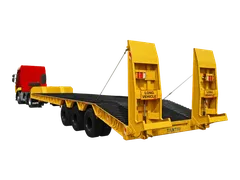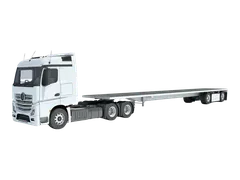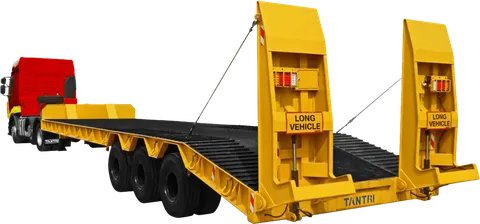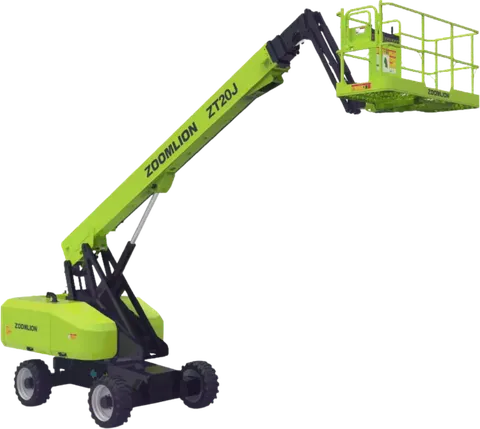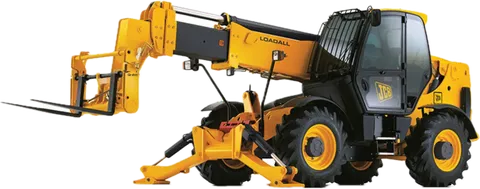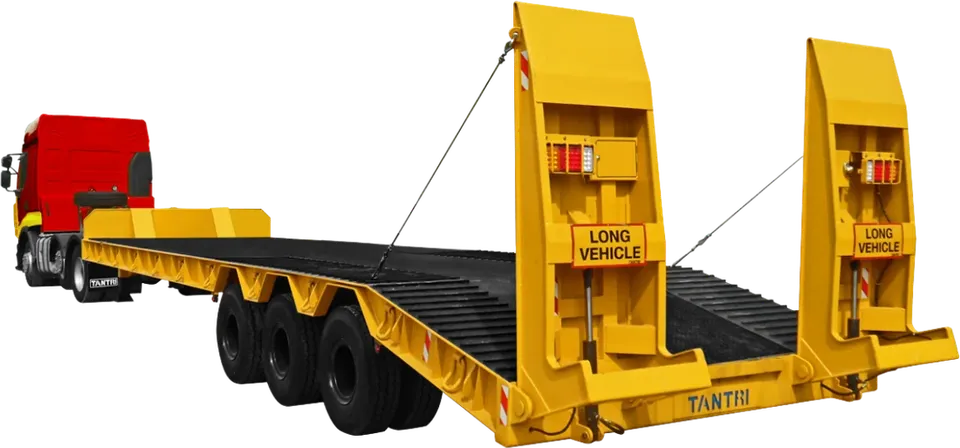
The transporter is booked for tomorrow, and you are the person who must have the machine and the ground ready. This guide is for site supervisors and machine owners who need to prepare to move heavy equipment by trailer. It covers the preparation only: four stages you can run from your phone, with the reason behind each line. Choosing the trailer is a separate decision.
What must you confirm about the machine and the route?
Do this first, ideally the day before.
- Weight and size as it will travel. Confirm the weight, length, width and height of the machine as it will sit on the trailer, with the attachments that travel on it. The transporter chooses the trailer from these figures.
- Which attachments go on the trailer. A bucket, blade, breaker or boom section may travel separately.
- Overhead clearance along the route. Compare the loaded height (machine plus deck) with bridges, gantries and power lines.
- Whether the machine can drive on. A machine that will not start or will not steer cannot be driven up the ramps. Tell the transporter now: it needs a different loading method.
- Low ground clearance. Tell the transporter if the machine sits low underneath, so the ramp angle and deck suit it.
- Loading and unloading addresses. Share the exact site entrances, gate widths and contact people at both ends.
If you are still choosing the trailer type, read lowbed vs flatbed vs modular trailer first. Requirements for permits and escorts differ by project, municipality and route, so ask the transporter what applies to your move.
Is the loading place ready?
The trailer and the machine stand on the same ground, which carries their combined weight.
- Choose firm, level hardstanding. Soft, wet or sloping ground is a loading hazard: the trailer can sink or tilt, and a machine can slide.
- Check for buried services, soft backfill or a recent trench near the loading spot.
- Leave room for the tractor head and trailer to approach in a straight line, so the ramps sit in line with the deck.
- Ask the transporter how the trailer will be made safe for loading, for example parking brake on, wheels chocked and ramps fitted and secured as the trailer's instructions require. Do not load onto a trailer that can still move.
- Keep people, vehicles and materials out of the loading area. A banksman and exclusion zones are part of the plan, not an extra.
- Sweep dust and sand off the approach if you can: on ramps and tracks it makes them slippery. Where the site allows, plan loading outside the hottest hours, because steel decks and ramps can get too hot to touch.
How do you prepare heavy equipment for loading on a trailer?
Prepare the machine in two parts: before the trailer arrives, so loading is quicker and safer, and once it is in position on the deck.
Before the trailer arrives
- Clean off thick mud and clay, especially from tracks, tyres and the underside. It adds weight, makes ramps slippery and falls off on the road.
- Check for leaks, loose covers and damaged tracks or tyres. Note anything you find.
- Remove or secure loose items in the cab, and close and latch doors, windows and engine covers.
- On a wheel loader or other articulated machine, find the articulation lock and its pin or bar now, and check that it is present and fits. Do not fit it yet: a locked machine cannot steer onto the trailer.
The manufacturer's manual shows the transport position and the lifting and tie-down points for your model. If it is not on site, ask the supplier or dealer. If the machine is to be lifted onto the trailer by a crane instead of driven on, that is a lift and needs its own lift plan and a competent crane crew; do not improvise it.
How is the machine loaded and secured?
Loading is the highest-risk moment, so keep it calm and slow.
- One signaller (banksman) guides the driver. Agree hand signals before the engine starts.
- The operator, who must be trained and authorised for that machine, aligns the machine with the centre line of the trailer and drives on straight and slowly.
- Do not steer while on the ramps. A turn on a ramp can put one side off the edge. If the machine is crooked, back off and line up again.
- Position the machine as the transporter directs, so the weight sits correctly on the deck.
- With the machine in position, fit the articulation lock, lower the bucket, blade or boom to the transport position shown by the manufacturer, and apply any swing or transport lock the manual calls for. Then switch off and take out the key. Follow the manufacturer's sequence if it differs.
- Lash the machine at the points marked for tie-down. Use chains or straps that carry a marked working load limit, and check them for cuts and damaged links. If you cannot find the points, ask the supplier or dealer; do not improvise.
- Never lash to hydraulic cylinder rods or other fragile parts. They bend or leak under load.
- Recheck the lashings after the first stretch of road. Ask the driver to stop at a safe place and tighten if anything has moved.
Watch out. The number of tie-downs and the force they must resist are set by the transporter and the manufacturer's instructions. Do not guess them on site.
Who needs to be on site, and what paperwork should be at hand?
| Who | Role |
|---|---|
| Site supervisor | Owns the plan and confirms the area is ready |
| Machine operator | Trained and authorised to drive the machine on and off |
| Signaller | Guides the operator, keeps people clear |
| Transport driver | Controls the trailer and, usually, leads the lashing |
Keep these at hand, on paper or on a phone:
- The booking confirmation with both addresses and contact numbers.
- The machine's weight and dimensions, from the manual or data plate.
- Any site pass or entry approval for the loading and unloading sites. Requirements differ by site owner and project, so confirm before the truck leaves.
- Any hire agreement or handover document, if the machine is rented.
Before the truck leaves, photograph the machine from all sides, including the tyres or tracks, the cab and any existing damage. Time-stamped photos give you a record of its condition at loading.
What do you check when the machine arrives?
- Ask someone at the unloading site to prepare firm, level ground, with the same checks as at the loading end.
- Walk around the machine on the trailer before the lashings come off. Compare it with your loading photos. Release the lashings only as the driver directs, with the trailer secured, because tensioned chains and straps can spring back.
- Unload with a signaller, straight and slowly, without steering on the ramps.
- Photograph the machine again from all sides. Report any new damage to the transporter and the machine owner before the truck leaves.
- If the machine is rented, continue with the arrival and return checklist for rented machines.
Common mistakes that delay or damage a move
| Mistake | Fix |
|---|---|
| Leaving the articulation lock pin or bar behind | Find it and check it fits before the truck arrives |
| Forgetting the height of the deck | Add the deck to the machine's height when you check bridges and power lines |
| Finding out on the day that the machine will not start | Test it the day before and tell the transporter if it cannot drive on |
| Nobody ready at the unloading end | Name a contact and the unloading spot there before the truck leaves |
| Assuming the quote covers loading help or waiting time | Ask what it includes: see what a rental rate includes and leaves out |
If your move starts at a port, see moving equipment from port to site.
How to do this on Maedah
On Maedah you can post a request once: the trailer or lowbed you need, the pick-up and drop-off locations, the dates and any requirements. Suppliers that offer lowbeds and serve your city send back sealed quotes that line up side by side.
Put the machine's weight and travel dimensions in the notes. When you compare quotes, check what each one includes, then agree the details with the supplier in the chat tied to the quote. Maedah does not process payments; you agree price and payment with the supplier.
If you need the pulling unit separately, browse tractor heads or trailers.