You need to move sand, aggregate, soil or debris, and both a compact bobcat and a larger shovel loader could do it. This guide is for contractors, yard managers and farm owners who must pick one before calling suppliers. It settles the skid steer vs wheel loader choice with three checks: the material, the space and the truck or task.
What does each machine do, and how does each steer?
A skid steer (called a bobcat in Saudi Arabia) is a small, compact loader. It steers by running the wheels or tracks on one side faster than the other. Because of this it can turn almost on the spot, in very little space.
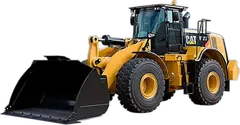
A wheel loader (called a shovel or loader) is generally a bigger machine. It usually steers by bending in the middle: the front and rear halves are joined by a hinge, called an articulated frame. This gives a smooth ride and good traction, but it needs more room to turn.
The skid steer's real strength is its quick-attach plate. Buckets, pallet forks, brooms, augers, breakers, trenchers and more can be swapped in minutes. For more on how attachments work on other machines, see excavator attachments explained.
Skid steer vs wheel loader: size, bucket, dump height and space
| Skid steer (bobcat) | Wheel loader (shovel) | |
|---|---|---|
| Steering | Side-to-side speed difference, turns in very little space | Articulated frame, needs more turning room |
| Bucket | Smaller | Larger |
| Dump height | Lower | Higher, usually enough for truck sides (check) |
| Travel speed | Slower over distance | Faster across a site |
| Attachments | Many, on a quick-attach plate | Fewer in practice, mainly bucket and forks |
| Best at | Tight sites, cleaning, varied tasks | Stockpiles, aggregate, loading trucks |
The two numbers that decide most jobs are dump height and turning room. A bucket that cannot clear the truck side is useless for loading, however strong the machine is. A machine that cannot turn in your yard is just as useless. Skid steers come as radius-lift or vertical-lift designs; a vertical-lift arm usually reaches further forward at full height, which helps at a truck side.
Note. Dump height is given in the machine's data sheet. Ask the supplier for it with the bucket fitted, not for the machine alone.
How much can the bucket really carry?
Material weight depends on density. The same bucket holds a very different load of dry sand, wet sand, gravel or soil. Wet material is usually heavier than dry. Loose material in a heaped bucket is also different from a levelled one.
Use a simple calculation:
- Take the bucket volume from the data sheet, in cubic metres. Check whether it is a heaped or a struck (level) figure.
- Multiply by the loose density of your material, in tonnes per cubic metre.
- The result is the weight in the bucket.
- Compare it with the machine's rated operating capacity.
For example, say a bucket holds 1 cubic metre and your material weighs 1.6 tonnes per cubic metre. The bucket then carries about 1.6 tonnes. These are example figures only. Use the real density of your material.
The rated operating capacity is a fraction of the machine's tipping load, and the machine's data gives it. The tipping load is the weight at which the machine starts to tip forward, measured under set test conditions. Never judge a load by the size of the bucket alone.
Watch out. Never work above the rated operating capacity. If the load is over it, fit a smaller bucket or take lighter bites.
The common mistake: hiring a machine because "the bucket looks big enough". The fix is the four steps above, done before you call suppliers.
Which one for loading trucks from a stockpile?
Choose a wheel loader. It has a larger bucket, a higher dump height and a faster travel speed. This is why it is the normal machine for loading trucks from a stockpile and for moving aggregate across a site.
A skid steer can load a truck too, but only if its dump height clears the truck sides. A small machine on a large truck means many passes and slow loading. For the truck side of the job, see dump truck types.
Before you choose, do two quick checks:
- Height: compare the dump height, with the bucket fitted, to the height of the truck side. Leave some clearance so the bucket does not catch the edge.
- Passes: divide the truck's payload by the weight in one bucket. For example, a 20-tonne payload and a 1.6-tonne bucket load means about 13 passes. If the number is high, a larger machine will save time.
Ask the supplier:
- What is the dump height with this bucket?
- What is the bucket volume, and the rated operating capacity?
- Is the machine suited to my material, for example abrasive aggregate or sand?
Which one for tight sites, cleaning and attachment work?
Choose a skid steer. It turns in very little space, works between buildings and in yards, and changes tools quickly. A diesel machine indoors needs good ventilation. Typical work: clearing debris, levelling, sweeping with a broom, drilling post holes with an auger, light breaking and trenching.
Attachments need a check. Each attachment needs the machine's hydraulic flow and pressure to be compatible. A breaker or auger that suits one skid steer may be wrong for another.
Ask the supplier:
- Which attachments come with the machine, and are they compatible with its hydraulic flow and pressure?
- Is the quick-attach plate a standard type, and does it fit my own attachment if I bring one?
- Is a high-flow auxiliary line fitted, if my attachment needs it?
If your job is mostly digging, a different machine may suit better; see mini excavator vs backhoe loader. For a wider view, read which earthmoving machine does what.
Tyres or tracks: working on sand and soft ground
Ground decides this. A tracked compact loader usually spreads its weight over a larger area and grips better in soft sand. A wheeled skid steer can dig in and spin on the same ground.
Wheeled machines have their own advantage. They are usually quicker on hard ground, and tyres are often cheaper to run than tracks there, though hard or abrasive ground wears tyres.
| Ground | Better choice |
|---|---|
| Soft or loose sand, mud | Tracks |
| Hard, compacted or paved ground | Wheels |
| Mixed site | Ask the supplier which they would send and why |
Saudi sites often have loose sand and dust. Dust blocks air filters and heat reduces cooling, so ask about the machine's maintenance record for your conditions (dust, sand and overheating). Requirements differ by project, site owner and insurer, so confirm before mobilising.
How do you use a skid steer or wheel loader safely?
- On a skid steer, the operator is protected by the cab frame and a restraint bar or door. Fasten the seat belt and use the restraint every time.
- Lower the arms and bucket to the ground, stop the engine and apply the parking brake before leaving a skid steer. Follow the manufacturer's entry and exit instructions, and never enter or leave while the arms can drop.
- On both machines, nobody stands under a raised bucket.
- Travel with the bucket low. Do not lift people in the bucket, and do not hang loads from the bucket or arms unless the machine is rated and fitted for it.
- Keep people clear of the turning area. The rear of either machine swings out when it turns (see banksman and exclusion zones).
Ask the supplier for a trained operator, the current inspection records and the daily walk-around inspection as part of the hire.
How to do this on Maedah
Post one request with the machine type, the city and site on the map, and the dates. Write the material you will move, the truck size if you load trucks, the attachments you need and whether the ground is soft sand. You can ask for a driver or operator in the requirements.
You can also browse bobcats and loaders as a guest. Suppliers answer with sealed quotes, shown side by side. Compare what is included and the bucket data. Agree price and payment with the supplier.