What size excavator do I need? Most small trenches and plot work fit the mini or midi classes; large pits and all-day truck loading need the standard or large class. The steps below turn your depth, trucks, access and transport into one class: a smallest size that does the work and a largest that fits the site. Quotes then cover the right machine.
How are excavators sized, and what do the tonnes mean?
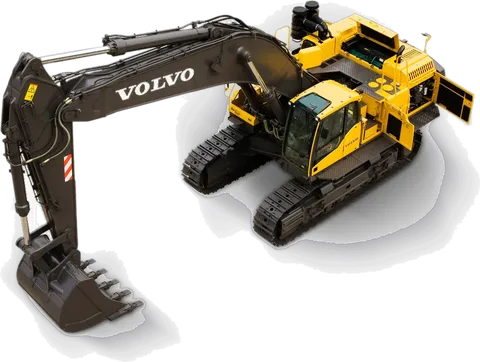
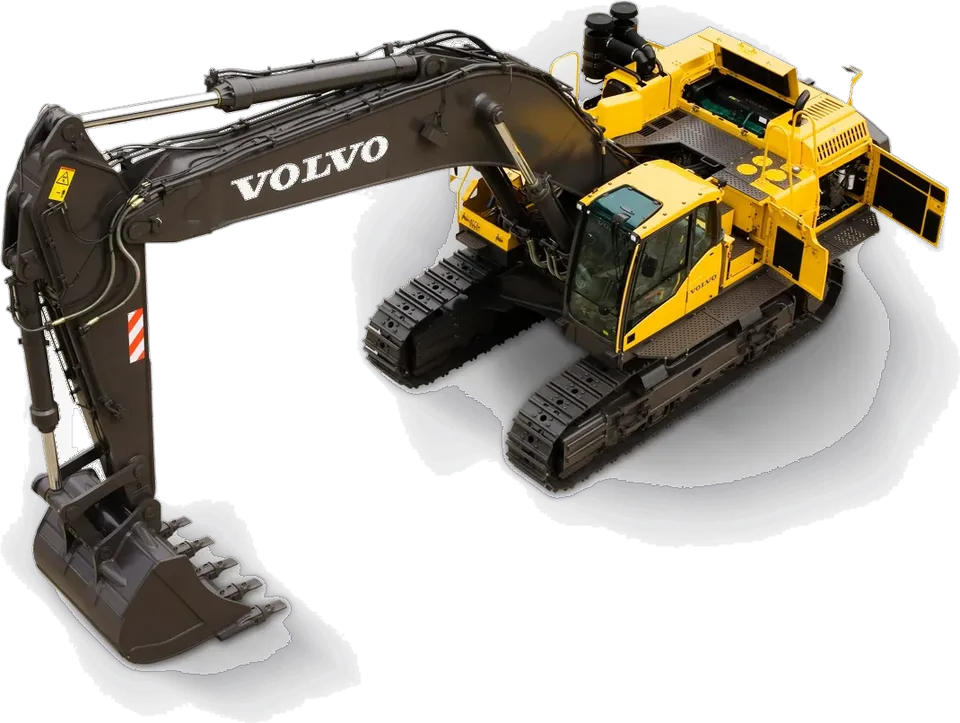
Excavators are classed by operating weight in tonnes: typically the machine ready to work, with fluids, a standard bucket and an operator, though makers differ. Weight guides depth, reach and bucket size, but a heavier machine also needs a bigger trailer and firmer ground.
Makers draw the class boundaries in different places, so the figures below are rough.
| Class | Roughly | Typical maximum dig depth | Typical bucket | Typical jobs |
|---|---|---|---|---|
| Mini or compact | Up to about 6 t | Up to about 3.5 m | Under about 0.3 m³ | Narrow service trenches, yard and garden work |
| Midi | About 6-15 t | About 3.5-5.5 m | About 0.3-0.8 m³ | House foundations, longer trenches, small ponds |
| Standard | About 15-30 t | About 5.5-7 m | About 0.8-1.5 m³ | Basements, large pits, steady truck loading |
| Large | Above about 30 t | About 7 m and more | Above about 1.5 m³ | Big earthworks, trucks loaded all day |
Ballpark only; read the spec sheet and chart of the exact model.
For example, a 3 t machine is a mini, a 13 t machine a midi and a 20 t machine standard. A 30 t machine sits at the edge of standard and large.
See mini excavators and full-size excavators. Also weighing loaders and backhoes? Read which earthmoving machine does what.
How deep and how far must it dig? Read the dig envelope
Every spec sheet has a dig envelope: a drawing of the maximum depth, the maximum reach at ground level and the dump height. These are the best case.
Reach is usually measured from the machine's centre of rotation (the swing centre), not from the tracks or the trench edge. Measure from the same point, or you will under-size the machine.
The two maxima do not happen at the same point: the chart shows the reach available at each depth, and it shrinks as the cut gets deeper. Ask the supplier for the chart and read the reach at your depth.
- Write the deepest cut, and the distance from the swing centre to the far edge.
- Add to that distance the room for the spoil heap and for the tracks to stay back from the edge.
- Choose models whose chart clearly covers both your depth and your distance, not just one of them.
For example, for a 3 m deep trench with the swing centre 4 m from the far edge, read the chart at 3 m depth and check it still shows at least 4 m of reach, plus a margin.
Before digging, locate buried services such as water, power, telecoms and sewer. The site owner or the utility holds the records, which may be incomplete.
Watch out. Cut sides need sloping, shoring or a trench box as the site's safety rules and the engineer require. Nobody should enter an unsupported trench.
How much material and which trucks: bucket size and loading
First estimate the volume to move and the days available. Divide the volume by the days to get the daily volume. Give the supplier that figure, the truck size and the site limits.
Bucket size is given in cubic metres. The dump height must clear the truck sides, and the number of passes sets the loading rhythm: each extra pass adds a full dig-swing-dump cycle while the truck waits.
Fewer passes load faster, but a machine big enough for very few passes may not fit the site. For example, say a dump truck holds about 10 cubic metres and the bucket about 1 cubic metre. A bucket is seldom filled to its rated size, so expect more than ten passes. Ask the supplier whether that rhythm suits your trucks and your daily volume, or whether a larger bucket or a smaller dump truck fits better.
Heavy wet soil or rock can also reach the truck's weight limit before it is full, so fill by weight, not only by volume.
If the rhythm is too slow, move up a class only if the site can take it, or use a smaller truck. Soil also swells when dug, so expect more truck loads than the pit volume suggests.
Never swing a loaded bucket over a truck cab or over people.
Can the machine get in, work in the space and sit on the ground?
Measure three things before you choose.
- Access: the narrowest gate or ramp on the way in.
- Space: room to swing the cab and counterweight (tail swing); a close wall can stop the machine.
- Ground: soft sand, fill, slabs or pipes underneath; heavy machines can sink, tilt or break what is below.
Reduced or zero tail-swing models keep the rear within, or close to, the track width as the cab turns. That helps beside a boundary wall; ask the supplier about the front swing too. Check overhead lines against the boom and dump height, and ask the site owner for the clearance rules.
Never assume a slab, cover or buried pipe can take the machine; the site owner or engineer can rate the ground. On soft sand or fill, ask for the track width and whether mats are needed. On hard or rocky ground, a hydraulic breaker must suit the carrier's weight and hydraulics; see the excavator attachments guide and breaker vs ripper vs rock drill. For hot, dusty work, ask for the service record and the last radiator and air-filter clean (dust, sand and overheating).
Will you lift pipes or loads with it? Check the lifting capacity
Digging force and lifting capacity are different ratings. Lifting follows the maker's lifting capacity chart, which falls as the load moves further from the machine and depends on the boom, arm and attachment fitted.
Before you lift, check:
- The load's weight, and the distance to where it must be placed.
- That the maker allows lifting with this model, with a rated lifting point and the safety devices required.
- That hitches and slings are load-rated, inspected and marked (see rigging basics).
- That a trained operator and a signaller work to a lift plan, with nobody under the load.
Watch out. Do not hang a load from the bucket teeth or by a chain around the bucket or arm. Use only the rated lifting point and rated hitch the maker provides. If the chart does not clearly cover your load and reach, use a crane.
How will the machine reach the site? Weight and transport
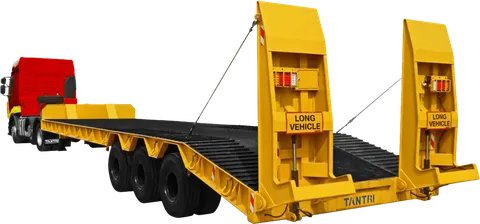
Excavators usually travel on a lowbed. Before you book, get these from the transporter and the supplier:
- Weight as loaded. It differs from the operating weight if a bucket or attachment is removed or added.
- Transport width and height with the boom folded.
- Unloading point. It must be firm and level, with room for the trailer.
- Route approvals. Wide or heavy road moves can need them, and they differ by route and authority.
- Who loads and unloads, and who is present on site.
See the lowbed pre-trip checklist.
How do I put it together into one class?
Combine the checks in three steps:
- The class that covers your depth, reach, bucket and lifting is the minimum.
- The largest class your gate, space, ground and trailer allow is the maximum.
- Pick the smallest class inside that range that meets the daily volume.
When is a bigger excavator the wrong choice?
"Take the bigger one to be safe" is a common mistake. A larger machine can make the job worse:
- Narrow trench or tight site. The machine cannot turn, or digs a wider cut than needed.
- Near buildings, roads or a wall. Weight and vibration raise the risk.
- Soft or weak ground. A bigger machine puts more total load on the ground and on anything buried beneath it. Wide tracks or mats spread it, but ask the site owner or engineer what the ground can take.
- Small, short jobs. Transport and unloading can cost more time than the digging saves.
Size to the main work, not to one unusual step such as a heavy lift. For a small job, compare with a backhoe loader. If the minimum is bigger than the maximum, change the method: a smaller machine plus a crane, split the job, or improve access.
How to do this on Maedah
Open a new request, choose the excavator category, and set the city and site on the map. In the description, add the depth, the narrowest access width, the truck type and any lifting. Set the dates.
Sealed quotes arrive side by side. Compare the class each supplier offers, what is included, response time and rating.