You manage a warehouse, yard or factory and need a forklift for a few weeks or months, but you are not sure whether diesel, electric or LPG is allowed or practical for indoor and outdoor use on your site. The power type decides where the truck may go, what must be ready on day one, and whether your shift plan holds. This guide gives you a decision table and a support checklist.
How do diesel, LPG and electric forklifts differ?
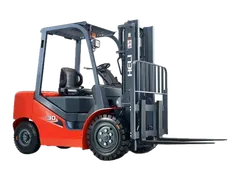
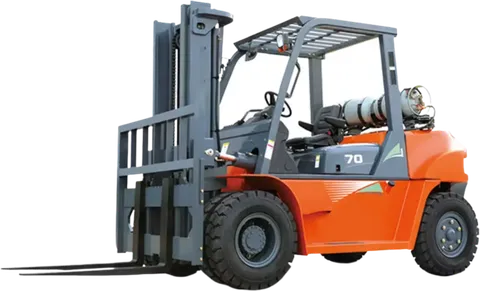
The three differ in what they burn, where the exhaust goes and what must stand next to the truck.
| Diesel | LPG | Electric | |
|---|---|---|---|
| Energy | Diesel fuel | Gas cylinder | Charged battery |
| Exhaust at point of use | Yes | Yes, including carbon monoxide | None |
| Noise | Usually louder | Usually moderate | Usually quieter |
| Usually chosen for | Outdoor yards, rough ground, heavier capacities | Mixed indoor and outdoor sites | Indoor, food and clean-area work on smooth floors |
| Needs on site | Fuel supply | Cylinder storage and swaps | Compatible charger and charging space |
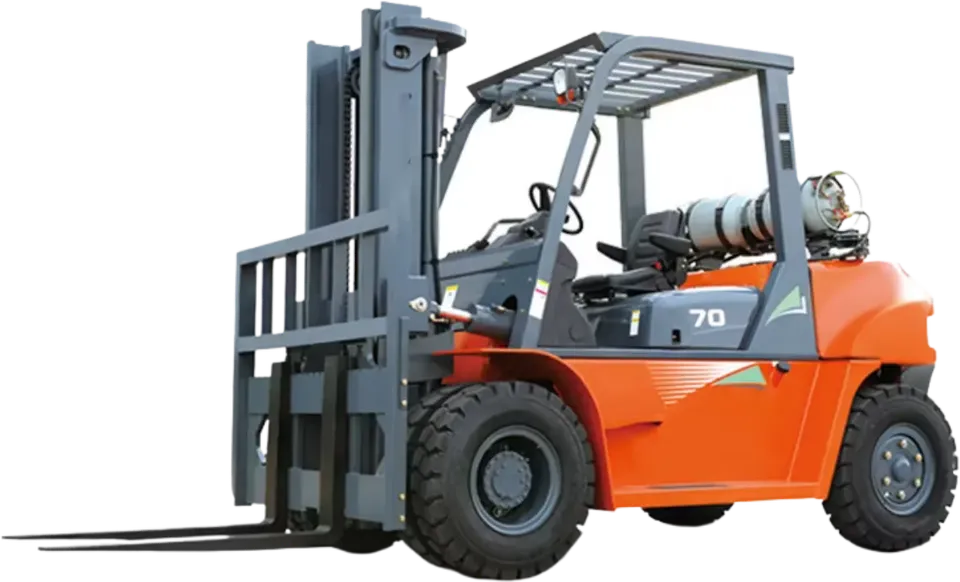
Two points the table cannot show. LPG trucks run on gas cylinders that a trained person can swap quickly, and they work indoors and outdoors on many sites. But they still make exhaust, so enclosed areas still need ventilation. Electric trucks depend on a charged battery and a charger that matches it.
Which power type for indoors, a loading dock or an open yard?
Use the place and the shift pattern together. This table is a starting point, not a rule. Your site owner and insurer have the final word.
| Where the truck works | Usual first choice | Why | Watch out for |
|---|---|---|---|
| Enclosed warehouse, smooth floor | Electric | No exhaust, quieter | Charging space and shift plan |
| Food or clean area | Electric | No exhaust at point of use | Floor should be smooth |
| Loading dock, in and out of trailers | LPG, or electric if the dock is sheltered and smooth | Works inside and outside | Exhaust can still build up inside the trailer, even with the dock door open |
| Open yard, hard flat surface | Diesel or LPG | Outdoor use, easy refuelling | Dust and heat |
| Rough or sandy site | Diesel, usually with pneumatic tyres | Outdoor use on uneven ground | Soft sand or very rough ground may need a rough-terrain forklift or telehandler. Ask the supplier |
| Cold store | Electric | No exhaust in a closed space | Ask the supplier if the truck suits the temperature |
| One shift a day | Any, by place | Time to charge overnight | Charging point must be ready |
| Two or three shifts | Diesel or LPG, or electric with a spare battery | No long charging stop | Charging window, and space and equipment to change a battery |
The dock is where most mistakes happen. A truck that spends its day half inside a trailer is working in an enclosed space, even with the dock door open. Treat it as indoor work.
To settle a mixed site, test each power type against the worst part of the day:
- Any enclosed area you cannot ventilate properly rules out diesel and LPG.
- Any rough or sandy ground rules out a truck on cushion tyres.
- Shifts longer than a charge, with no charging window or spare battery, rule out electric.
Whatever is left is your shortlist. If nothing is left, the site may need two trucks, for example one indoors and one in the yard.
Watch out. Never run a diesel or LPG truck in an enclosed space without proper ventilation. Carbon monoxide is dangerous and you cannot see or smell it.
What does each type need on your site: fuel, gas cylinders or a charging point?
Order the truck and its support together. A truck that arrives with nothing to power it is a day of site time lost.
Diesel
- A place to store and dispense fuel, or a supplier who refuels on site.
- A clear owner for the daily refuelling. The same question comes up with generators; see generator fuel planning.
LPG
- A designated storage place for cylinders. Cylinders are normally stored upright, in a ventilated area, away from heat and ignition sources.
- Follow the supplier's and the site owner's rules for storage and handling, and any local requirements for storing LPG.
- A person trained to swap cylinders, and a plan for who supplies the full ones.
Electric
- A charging point with the right power supply for the charger. Ask the supplier what the charger needs.
- Space for charging that is ventilated. Lead-acid batteries give off hydrogen while charging, so keep open flames, smoking and sparks away. Ask the supplier which battery type the truck has.
- A shift plan with a charging window, or a spare battery. Ask the supplier how the truck, battery and charger are arranged.
Tip. Ask the supplier: "What must be ready on site before the truck arrives?" Write the answer into the request. Also confirm that the operator is trained and authorised for that truck type.
How do tyres and floor surface change the choice?
The tyre decides whether the truck suits the floor. Two common types:
- Cushion (solid) tyres. Electric trucks often use these on smooth indoor floors. They are poor on rough, wet or broken ground.
- Pneumatic tyres. Diesel and LPG trucks are often fitted with these for outdoor or uneven ground.
A common mistake is to book an electric truck for a "mostly indoor" site that has a rough yard crossing or a ramp. The fix is simple: describe the worst surface the truck will meet, not the average one. If the floor or ground is rough, confirm the tyre type with the supplier before the truck is booked.
Also say how far the truck travels between indoor and outdoor areas. Frequent moves across a rough yard are a reason to choose a different truck or to plan a handover point.
How does Saudi heat affect the choice and the shift plan?
Heat, dust and sand affect every power type, so ask about them rather than assume.
- Summer shifts. Some sites change working hours in summer. Earlier or later shifts change when charging or refuelling can happen.
- Charging in hot weather. The charging space needs ventilation. Ask the supplier whether the battery and charger suit hot, dusty conditions.
- Dust and sand. Open yards put dust into engines and filters (see dust, sand and overheating). Ask how the supplier handles servicing and filter changes.
- Gas cylinders. Keep them away from heat and sun, in the designated storage place.
Requirements on emissions and indoor use differ by site owner, insurer and municipality. Confirm them before choosing the power type, not after the truck is on site.
What do you put in the request so the right truck arrives?
Say where the truck works, not only what it lifts. Include:
- The places: indoor, dock, open yard, rough ground, cold store.
- The floor or ground: smooth, uneven, sandy, ramps.
- The shifts: how many a day, and when the truck can stand idle.
- The support on site: a charging point, a gas storage place, fuel or none yet.
- Any site rule on indoor use or exhaust, from the site owner or your insurer.
- The tyre type, if the surface is not smooth.
Capacity, mast height and aisle width are a separate decision. See how to hire a forklift by capacity, mast height and aisles. If you are still deciding between truck types, such as a counterbalance or a reach truck, read forklift types and how to choose.
How to do this on Maedah
Open a request and choose forklifts. Add your city and site on the map, the dates and the number of trucks. In the description, write the power type you want or the place it works, the floor surface and the shift pattern.
Suppliers send sealed quotes that line up side by side. Compare what each includes, such as the charger, spare battery or cylinders. Check this against what a rental rate includes and leaves out. Use chat to confirm the support your site must provide, and agree price and payment with the supplier.