For contractors and project managers who must get machines to a site in or near Makkah or Madinah. It gives the order to decide things in, who to ask at each step, and a one-page checklist. Summer and Ramadan working hours are in a separate guide.
Why does planning in Makkah and Madinah start with access and timing?
Both cities receive very large numbers of visitors at peak times, so road access and working hours around busy areas can be restricted. A machine that is ready in the supplier's yard may still have to wait for a permitted time to travel or unload.
The first question is not "which crane?" but "when and how can any machine reach this plot?" Requirements differ by project, site owner, municipality and insurer, so treat this guide as a list of questions. Write down each answer and who gave it. A sensible order is:
- Confirm when machines may travel and work, and where they may park (site owner, municipality).
- Mark the season dates of your project year on the programme.
- Survey the plot: approach gradient, turning space, firm ground.
- Only then choose the machine, from the load chart for the heaviest lift at its working radius.
- Agree the route, unloading point and time window with the supplier in writing (see the movement section below).
How do Ramadan, Hajj and Umrah seasons affect the schedule?
Ramadan and the Hajj season follow the Islamic lunar calendar and move earlier by roughly ten to eleven days each Gregorian year. A schedule copied from last year's dates will be wrong, so check the dates for your project year.
Mark the busy periods on your programme and ask what changes in each:
- Are working hours or delivery times different?
- Should some lifts or deliveries happen before the busy period starts?
- Should a machine stay on site through a gap, or demobilise and return?
Umrah visitors also arrive at other times of the year. Ask the site owner which periods affect your plot, rather than guessing.
What can slip, and what it does to the programme. A missed delivery window rarely costs only the day. If the trailer must be re-booked, the next permitted window may be later than you hoped, and it may fall inside a busy period. Every task that needs that machine, and the crew booked for it, then moves together.
Decide early which tasks have float and which do not, such as a lift that must finish before a busy period starts. Book the tasks without float first.
For working hours in summer heat and during Ramadan, read how to plan machines for Ramadan and summer work schedules. This guide does not repeat that detail.
How do you plan machine movement on busy roads?
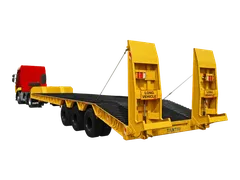
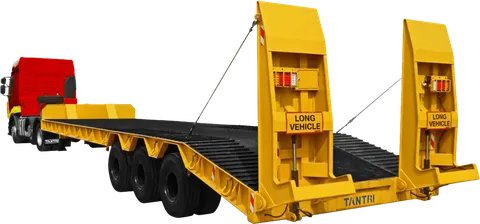
Large machines on lowbed trailers need a planned route, an unloading point and sometimes a time window. Do not assume a machine can arrive at any hour. Before you accept a quote, ask the supplier:
- Who arranges the route, and who arranges any escort?
- Where will the machine unload, and is there room to turn the trailer?
- What time window is expected?
- Are the machine's height, width and weight checked against the route?
Then ask what happens if the window is missed. Who re-books it, and does the machine wait on the trailer or return to the yard? Who carries the cost of waiting and of a second trip? The answers decide how much float the delivery needs.
Ask for all of this in the quote or in a message you can keep. A useful written answer names who arranges what, the unloading point, the window, and whether waiting time and escort are included.
Ask early what documents the site owner and municipality need for the driver, machine and trailer.
For the full pre-trip list, use the checklist for moving a heavy machine by lowbed. If a machine must arrive on a lowbed, agree the unloading point before the booking, not on the day.
Which lifting equipment suits constrained sites and sloping ground?
Parts of both cities have hills or rocky ground, and older districts often have narrow streets. Before you choose a crane or trailer, check three things on the ground:
- Access gradient: can a loaded or unloaded truck climb or descend the approach safely?
- Turning space: can the machine enter, turn and leave without blocking the street?
- Outrigger positions: is there firm, level ground where every outrigger can sit?
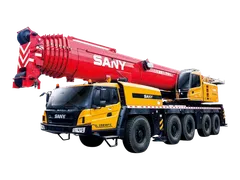
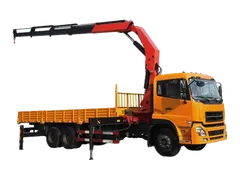
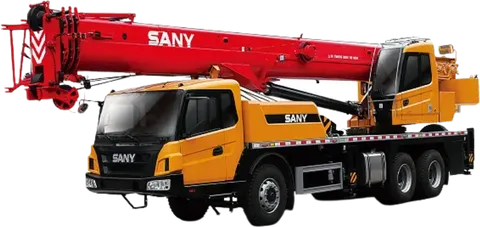
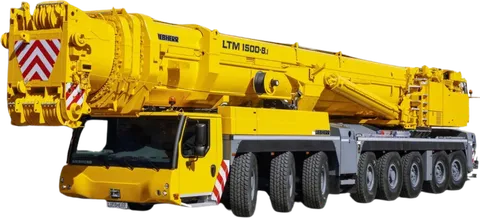
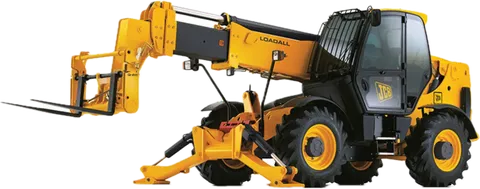
A boom truck or a compact mobile crane is typically easier to position on a tight plot than a large crane, but capacity and reach are limited. Choose from the manufacturer's load chart for the heaviest lift at its working radius, not from the headline capacity. Every lift still needs a lift plan and a competent operator.
Two rules settle most choices:
- If the outrigger footprint cannot be made firm and level, the choice is not final. Either change the machine or its set-up, or prepare the ground first. Agree how with the supplier and your engineer before the machine travels.
- If the chart does not cover the heaviest lift at its radius with margin, a boom truck is out, whatever the access. Move to a larger crane and solve the access problem instead: route, unloading point and street space.
| Option | Often suits | Watch out for |
|---|---|---|
| Boom truck | Tight plots, short reach, frequent small lifts | Limited capacity and reach; check the chart at your radius |
| Compact mobile crane | Narrow access, moderate loads | Usually needs firm ground for outriggers; check the chart for the exact set-up |
| Larger mobile crane | Heavy lifts, long reach | Needs more room, a harder route and firm, level ground |
If you are unsure which type fits, read boom truck or mobile crane: which do you need. To hire one step by step, see how to rent a mobile crane in Saudi Arabia.
Note. On sloping or rocky ground, ask the supplier how the operator will level the machine and spread the outrigger loads.
Construction equipment planning checklist for Makkah and Madinah
Access to, and work inside or near, the holy sites can be controlled, and it differs by site and period. The site owner or client is the only reliable source. Do not rely on a supplier, a colleague or an old project.
Ask for the answers in writing, including a named contact on the day. Then pass them to your supplier, who can plan the right machine, driver and route. Use this table as a one-page plan, and record who confirmed each answer.
| Area | Question | Ask whom |
|---|---|---|
| Timing | Which dates of this year are affected by Ramadan and Hajj? | Site owner |
| Timing | What hours may machines travel and work? | Site owner, municipality |
| Access | What is the gradient, width and turning space at the approach? | You, on a site visit |
| Access | Where may trucks and trailers park or wait? | Site owner |
| Movement | Are route, escort, unloading point, window and waiting time agreed in writing? | Supplier, site owner |
| Documents | What do drivers, operators and machines each need to enter? | Site owner |
| Lifting | What is the heaviest lift, at what radius, and who prepares the lift plan? | Your engineer, supplier |
| Ground | Is there firm, level ground for every outrigger? | You, supplier |
| Insurance | Do the access conditions change the cover? | Insurer |
How to do this on Maedah
Post one request with the machines and quantities, the city and site on the map, and your dates. Add what you know in the requirements: driver or operator, insurance, inspection documents, or Urgent. Also state the access conditions and permitted hours you confirmed with the site owner, so every supplier prices the same job.
The request reaches suppliers that offer the category and serve Makkah or Madinah. Sealed quotes come back side by side. Compare what each includes, such as route, escort and waiting time, and agree price and payment directly with the supplier.