This guide shows what to include in an equipment rental request. It is for site managers, procurement staff and owners whose earlier requests came back with a dozen questions, or with quotes that could not be compared. Use the lists below as a form: fill in the always-include part first, then the part for your machine type, then check your text against the weak and strong example.
Why does a vague request give you useless quotes?
A supplier can only price what the request describes. If it says "need a crane for next week", the supplier must guess the capacity, the length of hire, the site and whether an operator is included. Each supplier guesses differently.
You then get two kinds of reply. Some suppliers send questions, and you answer the same ones many times. Others quote on their own assumptions, so the quotes cover different things and cannot be compared.
The common mistake is to treat the first message as a hello. The fix is to write the supplier's questions into the request before they ask. The rest of this guide lists which ones.
What must every equipment rental request say?
These items belong in every request, whatever the machine:
- Machine type and size or capacity. "Excavator" is not enough; give the class or the work it must do.
- Quantity. One machine or three of the same type.
- Start date and expected duration. Say whether the dates are fixed or can move.
- Working hours per day and days per week. The rate is usually built on an expected amount of use, so a machine that runs ten hours a day, six days a week is a different job from one that runs eight hours, five days.
- City and exact site. Name the site, not only the city, and add a map pin or an address a driver can follow.
- Operator or not. Say whether you need a driver or operator supplied, or whether your own competent operator will run it (see wet hire vs dry hire).
- Delivery, return and fuel. Say whether you want the supplier to deliver and collect the machine, who supplies fuel, and whether anything else (operator accommodation, meals) must be included.
Tip. Not sure what a machine is called in the supplier's language? See heavy equipment names in six languages.
If you do not know an answer yet, write "not known yet" next to it. A supplier can plan around a stated gap, but not around a missing line.
What extra detail does a crane, an excavator or a generator need?
The basics above are the floor. Each machine type adds questions that decide which unit the supplier sends.
| Machine | Add this to the request | Why the supplier needs it |
|---|---|---|
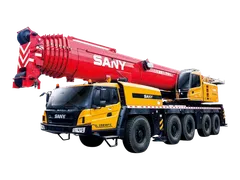
| Cranes | Weight of the heaviest load, lift radius, lift height, obstacles around the lift, and whether you need the supplier's lift plan | The supplier picks the capacity from the manufacturer's load chart, not from the load weight alone. Rigging and the lifting gear add to the load, so the supplier needs the full picture. |
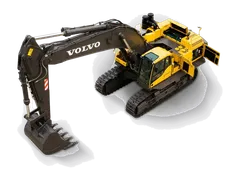
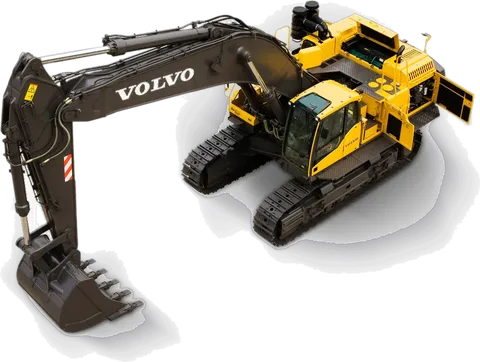
| Excavators | Dig depth, reach needed, material (soil, rock, rubble), attachment such as a breaker or a specific bucket, known underground cables or pipes | Depth and reach set the size; the material and attachment set the type of work. Buried services must be known before digging starts. |
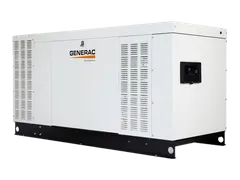
| Generators | Total connected load or the list of equipment it will run, voltage and phase, prime or standby duty | Prime (main supply) and standby (backup) are rated differently, and the load decides the unit. |
Give the facts that decide the size and, if your client's specification or the site fixes a class, state it as a requirement. If not, let the supplier propose the unit. If you want to understand the choice, read how to choose crane capacity or what size excavator you need.
How do I describe the site and access?
Access matters as much as the machine. A delivery can fail at the gate or on the approach before the machine ever reaches the work. Write down:
- Gate width and any height limit at the entrance.
- Street width on the approach, and whether a large truck can turn.
- Overhead lines near the route or near the work area. They are a serious hazard for cranes and tall loads, so the supplier and the site must plan around them.
- Ground: soft, sandy, sloping or wet ground changes what can be delivered and where it can stand.
- Unloading: whether a large machine can be unloaded on site, and where.
- Who meets the driver. Name the role (for example site foreman). Share the phone number with the chosen supplier after you accept a quote, not in the open request.
If you are not sure, say so. "Gate about 4 metres, not measured" is more useful than silence, because the supplier can then ask, or check before sending a machine that may not fit.
What requirements should I state up front?
Requirements are the things that can stop a machine at the gate. State them in the first message, not after the quote.
- Insurance requirements from you, your client or the site owner.
- Inspection: for example a TÜV inspection certificate, if your project asks for one.
- Site approval: for example Aramco approval, if the site needs it.
- Urgent start: say it plainly if the date is tight.
Naming a requirement does not mean you know the exact rule. Requirements differ by project, site owner, municipality and insurer, so confirm them with your client or site owner before the machine mobilises. Then write the result in the request.
Watch out. Do not leave approvals and inspection papers for the day of delivery. Ask the supplier for the current certificate and its expiry date while you are still comparing.
Should I add photos, a video or a voice note?
Yes, when they save words. Four things cover most questions:
- The entrance and the approach road, showing gate width, kerbs and anything overhead.
- The spot where the machine will stand or dig, showing the ground surface and slope.
- The load, if you are lifting or moving something: its shape and where it can be rigged.
- A short video walking the route in, from the road to the work area.
A voice note is faster than typing when you are standing on site. Whatever you attach, add one line saying what it shows, because a supplier may open it on a small screen.
A weak request and a strong one, side by side
This is an example of the same job written two ways. The numbers are made up to show the level of detail, not to suggest what your job needs.
| Weak request | Strong request | |
|---|---|---|
| Machine | "Need a crane" | "One mobile crane for lifting steel beams." |
| Load | Not stated | "Heaviest beam 6 tonnes, lifted at 18 m radius from the crane position, 12 m high, trees on the east side. Please send a lift plan." |
| Dates | "Next week" | "Start Sunday 18 October, 10 working days, 8 hours a day, 6 days a week." |
| Site | "Jeddah" | "Jeddah, map pin attached, gate 5 m wide, firm compacted ground." |
| Operator | Not stated | "Operator and rigger supplied by the supplier." |
| Delivery | Not stated | "Supplier delivers and collects; we supply fuel." |
| Requirements | Not stated | "Supplier's insurance cover and a valid inspection certificate required; site photos attached." |
The weak version gets questions back. The strong version gets quotes that cover the same work, so you can compare equipment rental quotes side by side without guessing what each one left out.
How to do this on Maedah
Your request reaches the suppliers that offer that category in your city. The request form takes the machines and quantities, the city, the site pinned on a map, the dates and requirements such as driver, insurance, TÜV inspection, Aramco approval or Urgent. Add photos, videos and one voice note to show the site or the load.
Sealed quotes then come back and line up side by side, showing what each quote includes. Price and payment are agreed between you and the supplier.
For the full process, read how to rent heavy equipment in Saudi Arabia.