This guide is for contractors, developers and site managers who have a plot in Jeddah, especially a dense one or one near the sea. It turns construction equipment planning in Jeddah into a short checklist you can send to suppliers: what to ask about the machine, the water, the lift and the delivery, before anything is booked.
What changes when the site is on the Red Sea coast?
Jeddah is a Red Sea port city. That one fact shapes the plan in four ways, and each has its own section below:
- Air: humid and salty, so metal and electrics age faster.
- Ground: water may sit close to the surface.
- Streets: older and denser districts have narrow access and many neighbours.
- Supply: imported machines and materials usually arrive by sea and finish the trip by road.
Not every plot has all four problems. Check each one against your own plot. For the wider picture, see how equipment needs differ across Saudi regions.
How do humidity and salt air affect machines and electrics?
Salt in the air speeds up corrosion. It attacks exposed steel, battery terminals, electrical connections and any unpainted part. A machine that has worked by the sea can look fine outside and still have a corroded connection inside a junction box.
Look first at the parts you cannot see from the ground. Ask the supplier:
- What is the machine's overall condition, and is any paint or coating worn through?
- How are the battery terminals and electrical connections protected?
- When was it last serviced, and what was done?
- Are there any warning lights, intermittent faults or past electrical repairs?
Tip. Photograph the machine at handover, including terminals and cable ends. A dated photo makes any later disagreement about condition much easier to settle.
Salt left on exposed steel keeps working, so ask the supplier how and how often they want the machine rinsed, and write it into the agreement. Do not pressure-wash electrical components or connectors unless the supplier says it is safe. Dust and sand add their own problems, covered in protecting machines from dust, sand and overheating.
What if there is groundwater in the excavation?
Near the coast, groundwater can be close to the surface. An excavation may collect water as soon as you dig below a certain level, and it may keep collecting after rain or as the day goes on.
Do not guess the water level. The soil or hydrology report for your plot is the right source for expected water levels. If you have no report, ask the client or the consultant who commissioned the design.
Then ask what the pump must handle. A pump should be sized for the inflow, not for the volume of the hole. Pump types and set-up are covered in choosing dewatering pumps for excavations. You can browse water pumps to see what suppliers offer.
Watch out. Where the water goes matters as much as the pump. Confirm with the site owner and the municipality where pumped water may be discharged. Pumping can also affect the stability of the excavation and of neighbouring structures, so have the designer or geotechnical engineer approve the dewatering approach on a dense plot.
Which lifting machine suits a tight urban plot?
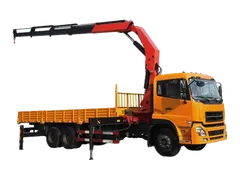
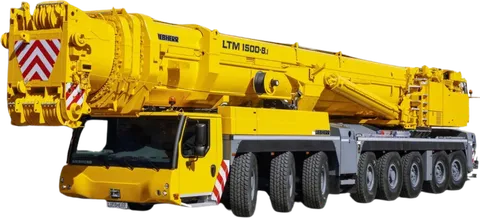
A boom truck (a truck-mounted crane) is typically quicker to set up than a larger mobile crane. It suits smaller loads on constrained plots. The trade-off is lower capacity and shorter reach.
Do not choose by the number on the machine's name. Find the heaviest lift, measure the radius from the machine to where the load must land, and read the manufacturer's load chart at that radius. Every lift still needs a lift plan prepared by competent people, and wind limits apply. Boom truck or mobile crane explains how to decide.
On a dense plot, check these before you book any crane or truck:
- Street width at the narrowest point on the way in.
- Overhead cables along the street and across the plot. Keep safe distances set by the utility and the site rules.
- Neighbouring buildings, and how close the load path passes them.
- Where the outriggers can safely sit.
Outriggers need firm, level ground and often spreader mats. A pavement edge, a buried service or soft backfill can all fail under a point load. Ask the supplier which boom trucks they can send; start from boom trucks.
How do machines and materials come from the port to the site?
Machines and materials imported by sea typically arrive at the port and then travel by road to your site. The final leg is often the one that surprises people. The full chain is in moving equipment from port to site.
Ask who handles each step. Arrangements differ by supplier and contract, so do not assume:
- Port clearance.
- Unloading at the port.
- The trailer for the final leg.
- Unloading at your site.
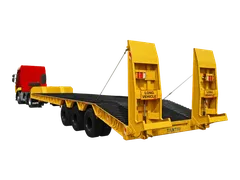
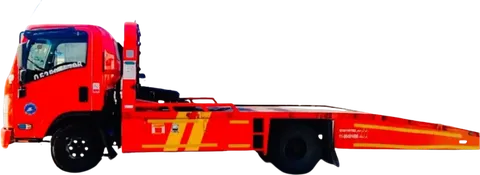
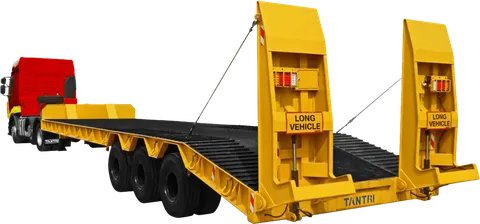
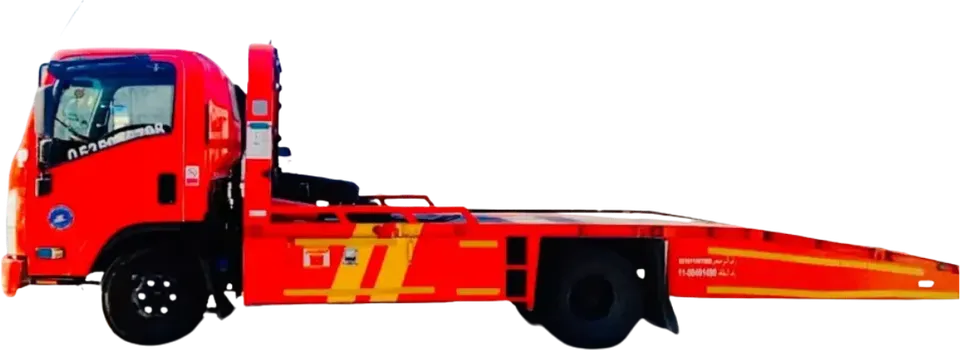
Heavy low-clearance trailers need clear approach roads and a safe place to unload. Before the lowbed is dispatched, confirm the route, the gate and the turning space with the supplier. Send them a photo of the gate and the street. For choosing the trailer, see lowbed vs flatbed vs modular trailer and the lowbeds category.
What do you ask the supplier before the machine travels to Jeddah?
Use this table as a checklist. Send it with your request, or go through it by phone. A supplier can only answer well if you tell them the site facts, so write a short site note first:
- Narrowest street and gate on the route, and the turning space inside.
- Overhead cables along the street or across the plot, yes or no.
- Ground where the machine will stand or the outriggers will sit.
- Whether you hold a soil or hydrology report.
- Allowed working hours and any closure windows.
| Topic | Ask | Why it matters |
|---|---|---|
| Condition | What is the state of the paint, steel and electrical connections? | Salt air corrodes exposed parts. |
| Service | When was the last service, and what was done? | A missed service can show up sooner in humid heat. |
| Protection | How are terminals and connectors protected? | Corrosion at contacts causes faults. |
| Water | What pump capacity is offered for my expected inflow? | The inflow comes from the plot, not the hole size. |
| Lifting | What is the capacity at my working radius? | Capacity falls as the radius grows. |
| Access | Can the machine pass the street, gate and turning space? | Size and clearance limit the route. |
| Ground | What outrigger loads and mat sizes does it need? | Outriggers need firm, level ground. |
| Transport | Who handles port clearance, unloading and the final trailer? | Arrangements differ by supplier. |
| Papers | What is the current inspection certificate, and when does it expire? | Your client may ask to see them. |
How do heat and working hours shape the day?
Jeddah summers are hot and humid, which is hard on people and machines. Plan heavy and precise lifts for the cooler parts of the day where the site allows it. Follow the site's heat-stress rules for operators and crews, and ask the supplier about cooling and fluid checks in hot weather. Scheduling equipment around Ramadan and summer covers the calendar side.
Working hours, road use and lifting near public areas differ by project, municipality and site owner. Confirm them before mobilising, and tell your supplier the allowed hours so the quote and the driver schedule match.
For example, say a delivery must enter through a narrow street that is open only in a set window. If the lowbed arrives early, it waits on the road. If it arrives late, the window closes. Agree an arrival time with the supplier, and keep the driver's phone number.
How to do this on Maedah
Post one request for the whole job. Choose each machine and quantity, mark the site on the map, and set the dates. In the requirements, add what you need: a driver, insurance, a TÜV inspection or an Aramco approval. Put the site notes in the description: narrow street, overhead cables, groundwater.
Suppliers who offer that category and serve Jeddah send sealed quotes. Compare them side by side, check what each one includes and who handles the trailer, then chat on the quote before you accept. Agree price and payment with the supplier directly.