This used excavator inspection checklist is for the buyer standing next to the machine with the seller waiting. It covers mini excavators too. Work through it in walking order, and sort each fault into one of three groups: ends the deal, needs a mechanic's opinion, or is a point for negotiation.
What do I check before I even start the engine?
Start with paperwork, because it costs nothing and can end the visit early. Find the serial number plate on the machine and match it with the papers. If the number is missing, painted over or different, stop there.
Then read the hour meter. Hours are a clue, not the full story. See how to weigh hours against age.
For proof that the seller can legally sell, follow how to check ownership of used heavy equipment.
Ask the seller not to run the engine before you arrive, because a warm engine hides hard starting and some smoke problems. A freshly washed engine bay can also hide leaks, so look for fresh residue around fittings.
Tip. Take photos of the serial plate, the hour meter and every defect you find. They help later when you compare machines or negotiate.
How do I check the engine and its cold start?
Before starting, check the area is clear and the hydraulic safety lock lever is in the locked position. With the engine still cold and off, check the engine oil, the hydraulic oil and the coolant level. Milky engine oil, or oil and coolant mixed together, is a serious warning. Milky hydraulic oil means water has probably got into the system. Open the radiator or coolant cap only when the engine is cold, because hot coolant can scald.
Now start the machine cold. Hard starting is a warning sign. Then read the exhaust:
| What you see | What it can mean |
|---|---|
| Blue smoke | Burning engine oil |
| White smoke | Coolant, or unburnt fuel |
| Heavy black smoke | Too much fuel, or restricted air |
Listen for knocking or uneven running as the engine settles. If the monitor shows warnings or fault codes, write them down and ask the seller what they mean. In Saudi heat and dust (see dust, sand and overheating), also look for a dirty air filter, radiator and cooler fins packed with dust, and hoses that are cracked or hardened by heat. A mechanic confirms the cause of any smoke.
Note. A little smoke at the first start can be normal. Persistent smoke after the engine has warmed up is the problem.
How do I check the undercarriage: tracks, rollers, sprockets?
The undercarriage is easy to inspect and expensive to replace, so look carefully.
- Check sprocket teeth. Pointed or hooked teeth mean heavy wear.
- Check rollers and idlers for flat spots, leaks and wobble.
- Check track links and shoes for cracks, uneven wear and missing parts.
- Check track tension against the manual's method. Too loose or too tight both speed up wear.
- Look for wear that is higher on one side. It can point to misalignment or hard working conditions.
- Check the travel motors and final drives for oil leaks and for whining or grinding noise when travelling.
Do not judge wear by eye alone. Get the manufacturer's wear limits for that model from the seller or the brand's dealer, then measure against them. Do not rely on a figure from the internet, because limits differ by make and model.
How do I check the boom, stick, bucket and pins?
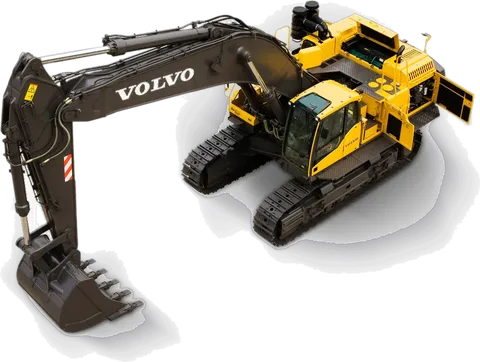
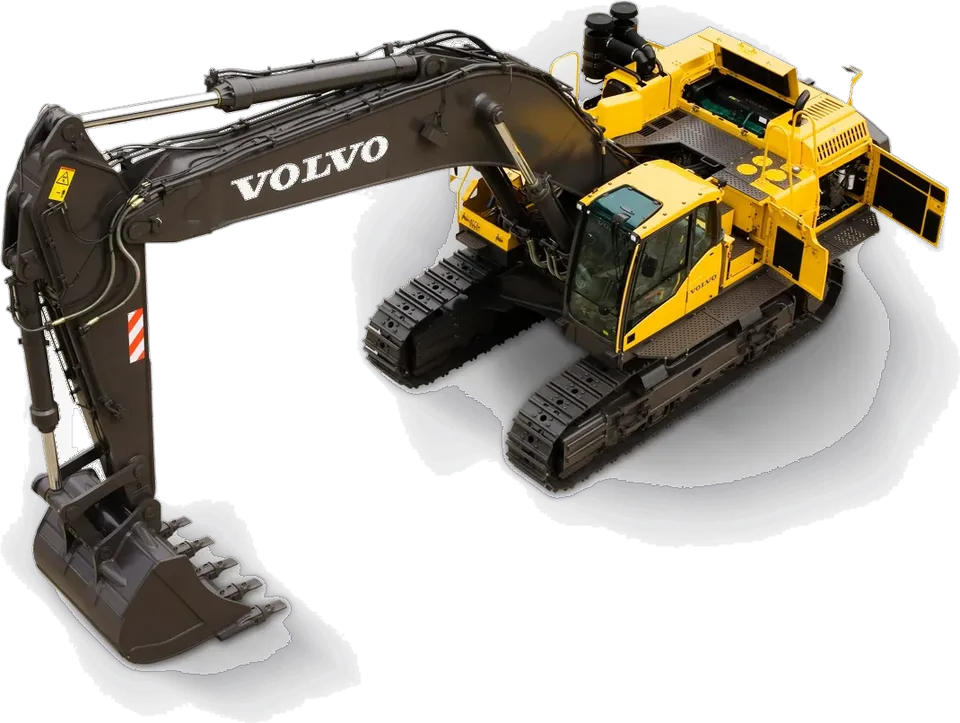
Walk around the whole arm and look for cracks in the welds. The most important places are the boom foot, the area near the stick and boom pins, and the bucket mounting. Watch for welds that look newly ground or painted, and for bent sections. A repaired weld is not always a deal-breaker, but ask who did it.
With the engine off, look at the pins and bushes for loose pins, scoring and lost retainers. Slack at each joint shows only when the arm moves, so you check that during the working test.
Watch out. Stay clear of pinch points and never stand or reach under a raised boom, stick or bucket. For a close look at pins, have the attachment lowered to the ground and the engine stopped first.
Also check:
- The cylinders. Rods should be smooth, without deep scoring, pitting or dents, and the seals should not seep fluid.
- Hoses, fittings, pumps and the swing motor, for leaks.
- The quick coupler, if one is fitted. Check that it locks fully and that the safety pin or lock is present.
- The cab or canopy frame. It should be straight and not cut, welded or modified.
How do I test the hydraulics, swing and travel?
Now do the working test. Let the seller's operator, or someone trained and authorised on that model, run every function through its full range: boom, stick, bucket, swing and both tracks. Do this with the machine warm, on firm, level ground, with everyone clear of its path and swing area. Include some digging if possible.
Check these points:
- Watch the pins and bushes at each joint for slack as the arm moves.
- Travel straight in both directions. A machine that pulls to one side has a track or hydraulic problem, and one track that feels weaker than the other can point to a travel motor or final drive.
- Swing in both directions. It should be smooth, without noise or slack.
- Raise the boom, stop, and watch from a safe distance. Slow settling is common, but fast drift is a fault. Compare it with the manufacturer's allowance.
- Compare cycle speeds with a similar machine. Slow or jerky movement can point to a worn pump or leaking valves.
- Watch the temperature gauge and warning lights as the machine works. In summer heat, overheating on a long dig is a red flag. Also check the cab air conditioning, because an operator in a hot cab works badly.
- Stop the engine after the test and look underneath and around the hoses again. Leaks often show only once the system has worked under pressure.
The swing bearing (slew ring) needs its own look. Check for loose or missing bolts, grease that is dirty or full of metal flakes, and noise or jerking on swing. Play is measured with a gauge using the manufacturer's method, so ask a mechanic to do it. A failing swing bearing is a major repair.
What are the extra checks on a mini excavator?
A mini excavator needs the same checks, plus a few more:
- Rubber tracks: look for cuts, cracks, missing lugs and exposed steel cords.
- The dozer blade: check for bends, worn edges and play in its pins.
- Retractable undercarriage, if fitted: extend and retract it and check it moves evenly.
- Auxiliary hydraulic lines: if you plan to fit a breaker or auger, check the lines, couplers and flow. See excavator attachments.
Small machines can be worked hard and moved often, so check the mounting points for damage. If you are still choosing the size, read what size excavator you need.
Which findings mean walk away, and which can be negotiated?
| Finding | Decision |
|---|---|
| Serial number does not match the papers. | Walk away, unless the issuer of the papers corrects them in writing. |
| Cracks in boom, stick or main frame welds. | Walk away, unless a qualified engineer or workshop confirms in writing that they can be repaired. |
| Failing swing bearing. | Walk away, or price it as a major repair. |
| Milky engine oil, or oil and coolant mixed. | Walk away, unless a mechanic finds and prices the cause. |
| Milky hydraulic oil (water in the system). | Investigate; negotiate only once a mechanic has found the cause. |
| Boom or stick drifts down fast. | Investigate; negotiate only once the cause and repair cost are clear. |
| Worn tracks, rollers or sprockets. | Negotiate, based on measured wear. |
| Loose pins and worn bushes. | Negotiate, once you know the repair scope. |
| Minor leaks at hoses or fittings. | Negotiate; these are usually simple repairs. |
| Worn bucket teeth or cutting edge. | Negotiate; these are normal wear items. |
If the problem is structural, or hidden inside the engine or swing system, the risk is large. A wear item you can see, measure and replace is a price discussion.
If you are not sure, ask an independent mechanic to inspect the machine. Agree this with the seller first. Never buy on a promise that a safety-related fault will be fixed later.
How to do this on Maedah
Browse excavators and mini excavators for sale, with photos, specs and city. Or post one request with the machine, city and requirements, saying you want to buy. Suppliers that offer the category and serve that city can send sealed quotes, which you compare side by side. In the quote chat, ask for photos, the serial number and service records before you travel.
Maedah does not inspect machines; agree price and payment with the supplier. For the whole process, see buying used heavy equipment step by step.