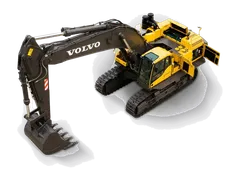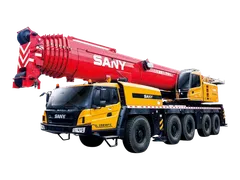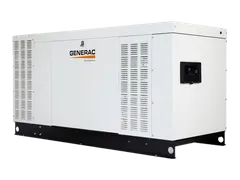
A matching request has just reached you, and other suppliers have probably seen it too. This guide is for rental companies, owner-operators and dealers. It gives a fixed order for the first hour and a checklist of what an offer must state to hold up against sealed competing quotes.
How do you respond to an equipment rental request in the first hour?
Work in this order: read the whole request, test whether you can deliver, decide which questions matter, quote with your assumptions stated and ask those questions in the chat tied to the quote, and confirm any answer that changes the machine, the price or your yes or no. Each step has a section below, in the same order.
What is in a request, and what does each part tell you?
A request is a short brief. Each part decides something different.
| Part of the request | What it tells you |
|---|---|
| Machine(s) and quantity | Which units you must have available, and whether you can cover all of them |
| City and site on a map | Transport distance, access, and whether you serve the area |
| Start and end dates | Whether your machine is available for the whole period |
| Requirements | Driver, insurance, TÜV inspection, Aramco approval, Urgent |
| Notes or photos, if the customer added any | Site conditions and anything unusual |
A project request can contain several machines. Check each line separately: you may be able to supply two of three, and the customer needs to know which. Open the site pin too: a paved yard and the end of a desert track are two different jobs.
Should you quote at all? A quick yes/no test
Quote only what you can deliver on those dates, at that site, with the stated requirements. A quote that later turns into a withdrawal can cost you more than not quoting: the customer loses time, and your reputation can suffer.
Treat a "no" or "not sure" in two ways. If it is about your own capacity (items 1, 3, 4 and 5), check internally. If you still cannot confirm it, decline and do not quote. If it is about job details (item 2: ground, access, hours, fuel, whether the dates can move), quote with your assumptions stated, make the price conditional on confirming them, and ask in the quote's chat.
- Is the machine, or a suitable one, available for the whole period?
- Can you reach the site, and can the machine work there?
- Do you hold what the requirements ask for: operator, valid inspection papers, insurance, site approval?
- Can you start on the requested date, especially if the request is Urgent?
- For several machines, can you supply the quantity asked?
If the machine is not available, do not hold a quote hoping it will be. Keep your calendar true; see keeping your equipment availability up to date.
Which questions are worth asking about a rental request?
A good question changes the machine or the price. On Maedah the chat is tied to your quote, so you can ask only after you have quoted. That is why your own capacity must be settled first (see above). Then send a quote that states your assumptions and ask in its chat. Useful questions concern:
- Ground and access: soft ground, slopes, gates, overhead lines, and where the machine will be unloaded.
- The work itself: for a crane, the lift weight, radius and height, so the crane and operator can check the manufacturer's load chart (how to read it) and plan the lift; for an excavator, the digging depth and reach; for a generator, the load it must carry.
- Hours: how many hours per day, and on how many days.
- Operator and fuel: who supplies the operator (see operator included or not) and who supplies the fuel.
- Dates: whether the start or end can move. If you cannot meet the requested dates, say in the quote which dates you can meet.
Send all your questions in one short numbered message so the customer can answer in one go. Do not ask for things already in the request. If an answer could change your yes or no, say so in the quote.
Example only. A first message on an excavator request might read: "Quote is based on firm, level ground and an open gate wide enough for a low-loader. Please confirm: 1. Is the ground firm, or soft after rain? If soft, the price may change. 2. How many hours per day? 3. Do you supply fuel? 4. Can the start date move by two days?" Four short questions, each tied to the price or the delivery.
What must a complete quote state?
A customer comparing offers cannot guess what is missing from yours. Use this as your checklist.
| A quote states | Why it matters |
|---|---|
| The rate and its basis: daily, weekly, monthly or per trip | Rates on different bases cannot be compared |
| What is included: operator, fuel, delivery and return, insurance | These are the usual sources of surprise costs |
| What is not included | Saying it now avoids a dispute later |
| Any minimum period or minimum hours | A low rate with a long minimum may cost more overall for a short job |
| How long the offer stays valid | Your machine may be booked elsewhere tomorrow |
| Start date and where the machine will come from | Shows you read the request |
| Payment terms and timing | Maedah does not process payments, so you and the customer agree them directly |
Write each of these in plain words. The same rate can mean different things; what an equipment rental rate includes and leaves out explains where. For the number itself, see rental rate strategy without racing to the bottom.
Example only. For an excavator needed for three weeks, a clear quote might read: daily rate; operator, fuel, delivery and return included; insurance not included; minimum ten days; valid for seven days.
How do you stand out in a side-by-side comparison without cutting your rate?
Quotes are sealed: suppliers cannot see each other's prices. The customer sees them side by side, with price, what is included, response time and rating, and the best value marked. So compete on what you control:
- Completeness. A quote that covers the whole checklist is easier to choose than one the customer must chase.
- Clarity. Plain, specific wording beats a long message. Comparing equipment rental quotes on the same terms shows what the customer looks at.
- Relevance. Mention the one thing in the request that matters most, such as site access or the required inspection.
- A prompt first reply. Response time shows next to your quote, and the Fast responder badge comes from actual performance.
Never assume away a safety point: if ground, access or lift details are unknown, say the price depends on confirming them.
What should you do after the customer replies, accepts or declines?
Answer in the chat tied to your quote, so agreed changes stay attached to the offer. If the customer asks for a change, such as new dates or a different hours limit, confirm it in writing there. If the change affects what is included or the minimums, write the new terms out in full in the chat, say that they replace the earlier ones, and ask the customer to confirm.
When the customer accepts, a booking is created and the other quotes are closed. Then:
- Confirm the start date, the site contact and the delivery plan in the chat.
- Confirm payment terms and timing, if not already written.
- Update your availability so the machine is not offered for those dates.
- Prepare the machine and its papers, such as inspection certificate and insurance, and check them against the request before delivery.
If the customer declines or chooses another supplier, keep your availability current and move on.
How to do this on Maedah
Requests reach you as opportunities when you offer that category and serve that city. Open the request, check the machine lines, site pin, dates and requirements, then send your quote with the details above and use its chat for questions. To see what a good brief looks like, read what to write in an equipment rental request. Suppliers of excavators, cranes and generators can list their machines to receive matching requests. If you need a machine yourself, you can post a request.